A Sermon by the Very Rev. Tom Purdy of Christ Church Frederica on St. Simons Island for the Evening Prayer service of the 200th Convention of the Episcopal Diocese of Georgia on
Thursday, November 4, 2021
The Feast Day of Richard Hooker, Transferred
November 4, 2021
The Episcopal Diocese of Georgia Convention Evening Prayer
St. Mark’s Episcopal Church, Brunswick, GA
The Very Rev. Tom Purdy
So, I’m sitting at the coffee shop working on my sermon for tonight, and the guy next to me says, “What are you working on?”
I said, “I’m writing a sermon about Hooker.”
He gave me a funny look, furrowing his brow, before he said, “Oh! TJ Hooker – I used to like that show – 80’s, right? William Shatner is a great guy!”
I laughed and said “Agreed – Shatner is great, but no, not that Hooker.”
“Oh, Ok,” he said, cutting me off, “I guess I remember that story in the Bible of Jesus and not casting stones at the woman.”
“I think that was a story about adultery,” I admitted. “Different kind of Hooker. This one is the Protestant.”
He said, “I don’t care what you call it, that’s a strange thing to preach about. What kind of church is this, anyway?”
I said, “I’m an Episcopalian, but I think you misunderstand me I’m talking about Richard Hooker.”
He thought for a moment and said, “Richer, huh? Well, I always knew you Episcopalians were top shelf.”
I said, “Let me try to explain again, I’m not expressing myself well.”
And he said, “No, no need to buy me an espresso – I’ve already had my coffee.”
And that was the end of it. It was like we were speaking a different language…or maybe he just didn’t hear me very well.
But you all know who Richard Hooker is, right? He’s inspired countless philosophers and theologians; he inspired ZZ Top to grow their famous beards. Ok, not really, and he doesn’t look anything like William Shatner, but the guy did have style. He’s one of the Anglican theologians that most Episcopalians know about, even if they think he’s a furniture maker because when we learned about him, we learned about his three-legged stool. We’ll come back to that.
When they gave me the option to choose the readings for tonight as preacher, as I thought about transferring the feast of Richard Hooker, I realized he is perfect for this occasion. I mean, how can you not celebrate Richard Hooker at a convention in which we are taking up a major revision to our constitution and canons? Polity is his thing. I actually looked to see if there were any Richard Hooker bobble heads as patron saint gifts for our Constitution and Canons Committee, but shockingly, I couldn’t find any.
I think we need Richard Hooker right now. We need a Richard Hooker moment in the Church, and a Richard Hooker moment in this nation. Some of you are probably thinking, “What does an old, white, English dude from the 16th Century possibly have to offer us here in Georgia in the 21st Century?” Well, think of it this way; in Hooker’s day his country was being torn asunder by politics, a back and forth that very much pulled churchgoers and clergy into the fray for generations. He was born under the Catholic rule of Mary the First, five years after the first Book of Common Prayer was published, but grew up under Elizabeth the First, who championed moderate Protestantism.
Today, if someone comes to me and demands that I use a particular liturgy or prayer book, I’m tempted to ask, “You and what army?” In Hooker’s England, that might not have been the question to ask! The army could be just outside the door, ready to enforce use of the prayer book. Politics and religion were incredibly intertwined so that it became hard to separate what was political from what was theological and what was both. Were they going to be Catholic or Protestant? Papal or independent authority?
The shores of institutional trust were shifting sand. That sand was eroded by waves of infighting and controversy, polarization, and extremism, which were tearing things apart from within. This is the world in which Hooker trained as a priest and theologian.
Richard Hooker is credited with being able to step back and get the big picture to sift through how institutions could faithfully serve God and God’s people again. His seminal work was the eight volumes of The Laws of Ecclesiastical Polity, although the last three volumes were published after his death and may or may not have been completely his. Regardless, while he was a defender of the authority of the monarchy, his mastery came in articulating how to live in the center of the extremes between the papacy and puritanism.
He was concerned about civil and spiritual structures. His writing articulated the elements we know today in shorthand as scripture, tradition, and reason, which make up the legs on that stool we talked about earlier. The proverbial stool the Anglican Church sits on to chart its course using the bible, the traditions of the Church before us, and the brains God gave us. Richard Hooker never really built the stool we credit him with, not in so many words. But he left the parts lying around the theological woodshop. Those who came after him pulled it all together into the teaching we have today.
Like the Caroline Divines in the next century, who took his work and were able to articulate the Via Media – the Middle Way between Catholicism and Protestantism – not as a compromise born out of weakness, but as an intentional and admittedly uncomfortable place from which to bear witness to the breadth of God’s revelation through the Church – even though the Church is so fragile and fallible. He knew institutions would be good or bad, strong or weak, depending on the season, but the faith and piety – the hearts of the people who made them up mattered most. If the people are oriented properly towards God, institutions would reflect that reality.
Hooker also knew how hard this work was during times of change and upheaval. He took what became the original classical Anglican stance of treasuring the medieval Church’s witness and practices while also recognizing a need to embrace change coming out of the Reformation. It is the grounding in the foundations of the past, he would say, that allows change and newness to be possible without the whole thing collapsing.
The Church can do a new thing without everything being new.
Friends, I don’t know if you’ve noticed, but we’re in a period of upheaval and stress; some say it goes in roughly 500-year cycles[i], and you and I are fortunate to be living through one now(!). Our institutions have been decimated in so many ways, including the Church. We face an increasing pandemic of political polarization, and we haven’t done a good job of flattening the curve yet. The physical pandemic has accelerated many of these challenges, as I am reminded by looking out at a congregation wearing masks. We can’t pretend that the Church lives in one world and politics in another much longer. I’m not saying we should all become politically active, or that the Church should take political sides. On the contrary. We need to figure out how the Church – the Body of Christ – can regain its voice in a way that effectively shapes the world around us – shapes it in ways it so desperately needs as we bring the kingdom to bear on earth as it is in heaven.
Hooker noted that in the fight for reformation and change people and their institutions were drifting farther and farther apart, which leads to “strife, jealousy, discord, and bad blood.”[ii] Sound familiar? He agreed with St. Augustine and so many others[iii], who caution us against forming our institutions around what we’re against, and not what we’re for. He saw it on display in what he would call the excesses of the reform movement that, in places, staked out its position around opposition to what was before.
We need, as the theologians might say, a common object of love, not hatred, not fear – love. But listen and hear: our common life is being defined by fear and hatred, some would say contempt for one another[iv]. We’re often afraid of a changing world, or of people who are different than we are, and we lash out by diminishing one another and failing to honor the dignity of every human being. We’re being pulled apart at a time we so desperately need to be coming together. Political polarization is driving so completely through our society, it’s even taking up residence in our churches.
A recent article in The Atlantic describes the effect of politics on the Evangelical church, highlighting what happens when this unity around opposition takes root inside the Christian faith – when the faith is shaped by fear and contempt instead of metabolizing and transforming it with the Gospel of Jesus Christ. One pastor admitted how common it is for congregants to leave their church because of their politics but has never heard of someone changing their politics because it didn’t match their church’s teaching[v]. I’m with him on that one.
And we know how that happens, right? The article describes the tough spot pastors are in to be faithful but not offend; a tightrope walk many of us in this room and many of my ecumenical colleagues know well. It’s not that every church is suddenly becoming more partisan as we preach the gospel. It’s no coincidence that Episcopal Churches, often seen as progressive, are seeing the exact same trends as Evangelical churches, which are often seen as conservative. Our society has become hyper partisan, which makes the Gospel seem to be political or even partisan, whether we intend it to be or not, whether we’re progressive or conservative, protestant, catholic, evangelical, or any other kind label we use.
We don’t get to control that narrative, unfortunately. One of the best lines from The Atlantic article explains, “Sermons are short. Only some churchgoers attend adult-education classes, and even fewer attend bible study and small groups. Cable news, however, is always on.”[vi] Sermons are short (this one may not be), but there’s cable news 24/7, and I would add social media to that description, with its magnifying algorithms.
Y’all, we don’t need algorithms. What we need are rhythms of prayer and repentance, word and sacrament. This was Hooker’s strategy. Focus on the hearts of the people, the piety of those who make up the institutions. We don’t need Hooker’s monarch though; we have one. And we need to look to him instead of all the usurpers who clamor and shout about their earthly plans for salvation. We have the plan – we have The Way, we just need to follow it. And him. The political intrusion into the Church is an onslaught that seeks to confine and intimidate us about how we proclaim the Gospel of Jesus Christ, and we need to push back by living out the politics of love and preaching that Gospel in word and deed.
If this were a Eucharistic service, we’d be hearing the preface for baptism tonight, in which the presider prays for God to make us all citizens of God’s kingdom. Again, we hear that civic cross-over. We know about being citizens of this world and what it entails; we engage with that citizenship easily and all too frequently. What about the citizenship of God’s kingdom? What about living into those baptismal vows many of us will recite on this All Saints Sunday? We need to heed Paul’s warning to the Corinthians about “the wisdom and rulers of this age” and instead set ourselves firmly on God’s wisdom.
Those who came before us, who have labored in God’s workshop have worked the lathe, cut, and measured, and assembled much of our theological furniture. They may not have built precisely what we need for these days in this century, but they have left us the parts to work with, and Hooker is a good place to start; after all he taught us how to assemble and build with such things. As he would say, we can meet these days without fear because we have a tradition to rest on and build up from.
We must be careful not to be so afraid of change, so afraid that we’ll abandon who we are, that we give in to the pathological fear that hastens our demise[vii], even as we pride ourselves on being a top-shelf tradition for the faithful few – those smart enough to “get it”. The Church can do a new thing without everything being new. We can keep continuity with the past and embrace the future. We must. We must pull from the breadth of tradition and scripture – there is no end to the tools we have at our disposal to shape ourselves and the world around us and to assemble the Kingdom we’re called to inherit.
We need not be a people of fear, or hatred, or contempt. We have the luxury of an abundance of love, a love which drives out all the rest of it[viii]. We must reclaim the via media, the middle way between the various polarizing and competing forces that seek to divide and destroy. This middle way is not a hiding place, nor is it an easy place, and it won’t make everyone happy. In fact, it’s more like to make people quite unhappy because they won’t find cover for the wisdom of this age to grow in their hearts unchallenged. But you know what? This was never supposed to be easy.
The Episcopal Via Media is our place of strength from which to unleash the power of God’s love. We don’t have a Richard Hooker. We don’t really need him. Because we actually have thousands of them, including the hundreds gathered here tonight. The world now, or 500 years from now, may not understand these Episcopalians who gathered in 2021 speaking some foreign language, this language of love, but I hope no matter what they say about us, they won’t be able to say they didn’t hear us.
[ix] Final Notes from the Preacher
[i] The Rt. Rev. Mark Dyer is the original source of this, although Phillis Tickle popularized it.
[ii] The Laws of Ecclesiastical Polity in Modern English, Davenant Press 2019, p.5.
[iii] This is articulated by Brad Littlejohn at the Davenant Institute in his article, “In Defense of Discrimination: Why Richard Hooker Still Matters, posted March 22, 2019. It is also articulated in Arthur Brooks’ book, Love Your Enemies: How Decent People Can Save America From The Culture of Contempt, Broadside Books, 2019.
[iv] One of Arthur Brooks’ theses in Love Your Enemies is about the culture of contempt. He also shares the common theme around the Church’s need to be based on love, something we also hear a lot about from our Presiding Bishop.
[v] “The Evangelical Church is Breaking Apart”, Peter Wehner, The Atlantic, October 2021.
[vi]“ The Evangelical Church is Breaking Apart”.
[vii] Again, brought out by “In Defense of Discrimination.”
[viii] 1 John 4:18
[ix] Mr. Littlejohn’s and Mr. Brooks’ thoughts helped me to shape the arc of this sermon overall, in putting this moment in perspective and helping me see how Richard Hooker fits into it.

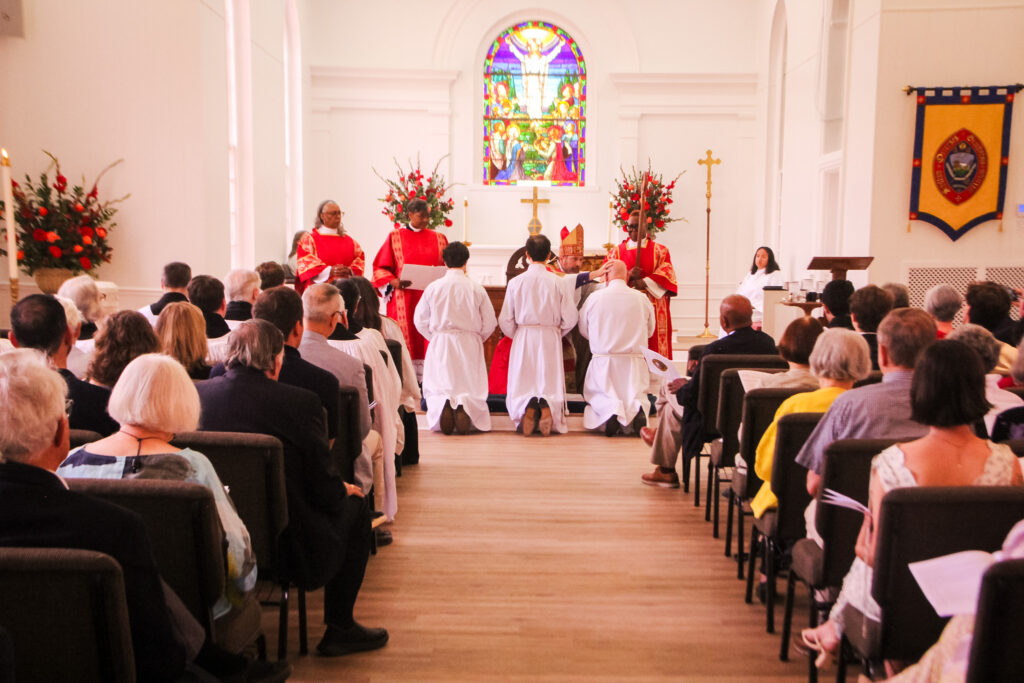
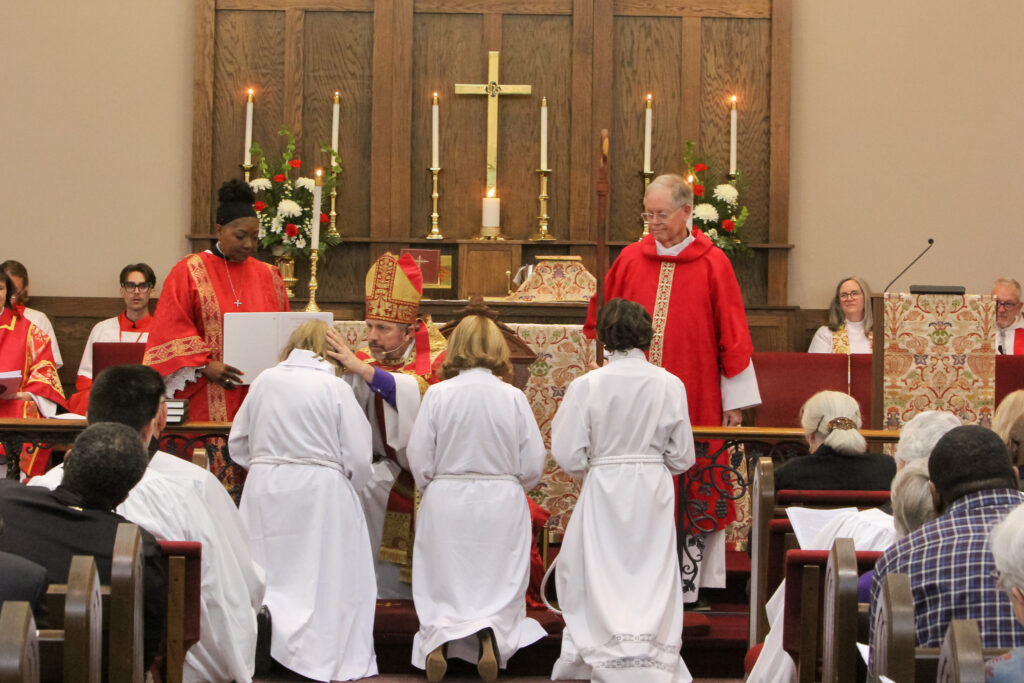 This is the outside-in message of the Kingdom of God that Jesus proclaimed to a world turned from God. Like the last being first and the humble being exalted, Jesus put the margins in the center. This is the ministry of a deacon. In the words of the Ordination Rite for a Deacon, “
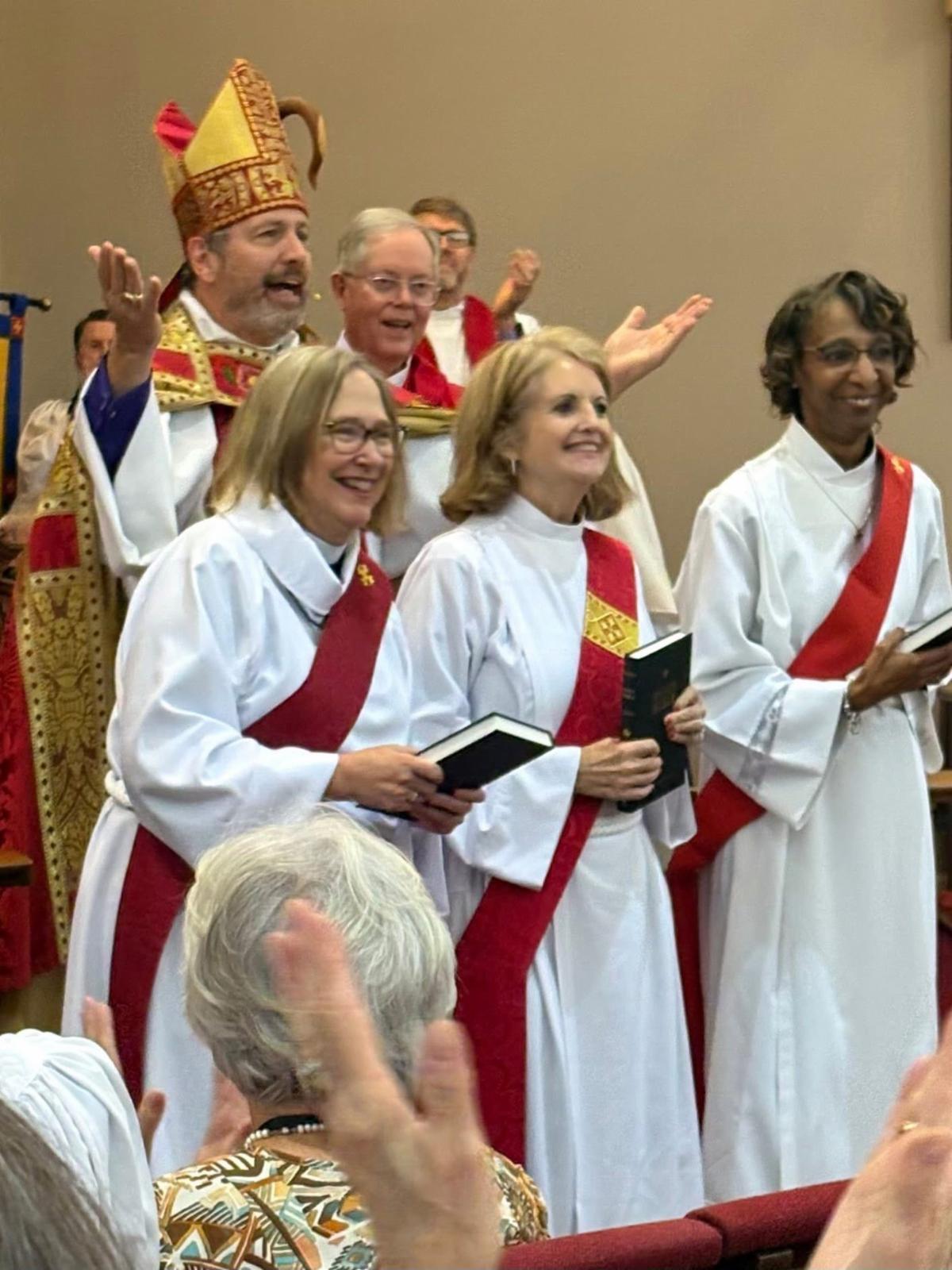 The Holy Spirit led each of these women to use their considerable gifts in service of others. This is, of course, what we are all to do as baptized Christians, to serve others as if we are serving Jesus and we are also to allow others to serve us. This mutual care best reflects the love of the Holy Trinity.
 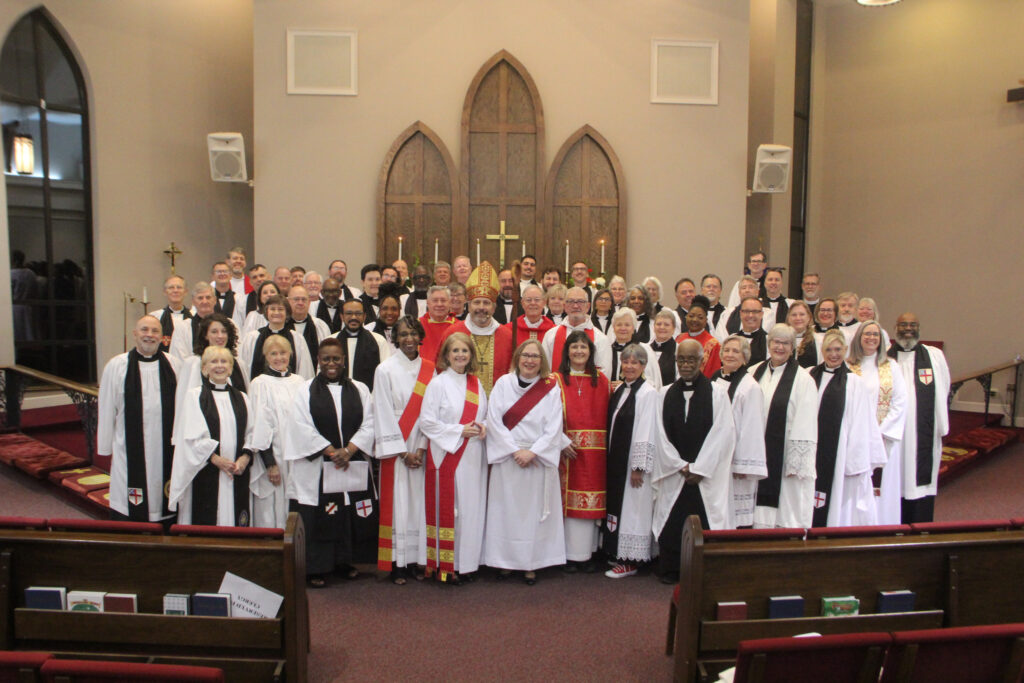 Deacons are icons of the servant ministry that embody this call. When deacons are doing their work of taking the church out into the community and bringing the needs of the community into the church, more of the congregation is challenged to join them or to find their own way to serve. This is how deacons encourage and strengthen the faithful into loving one another as Jesus loves us.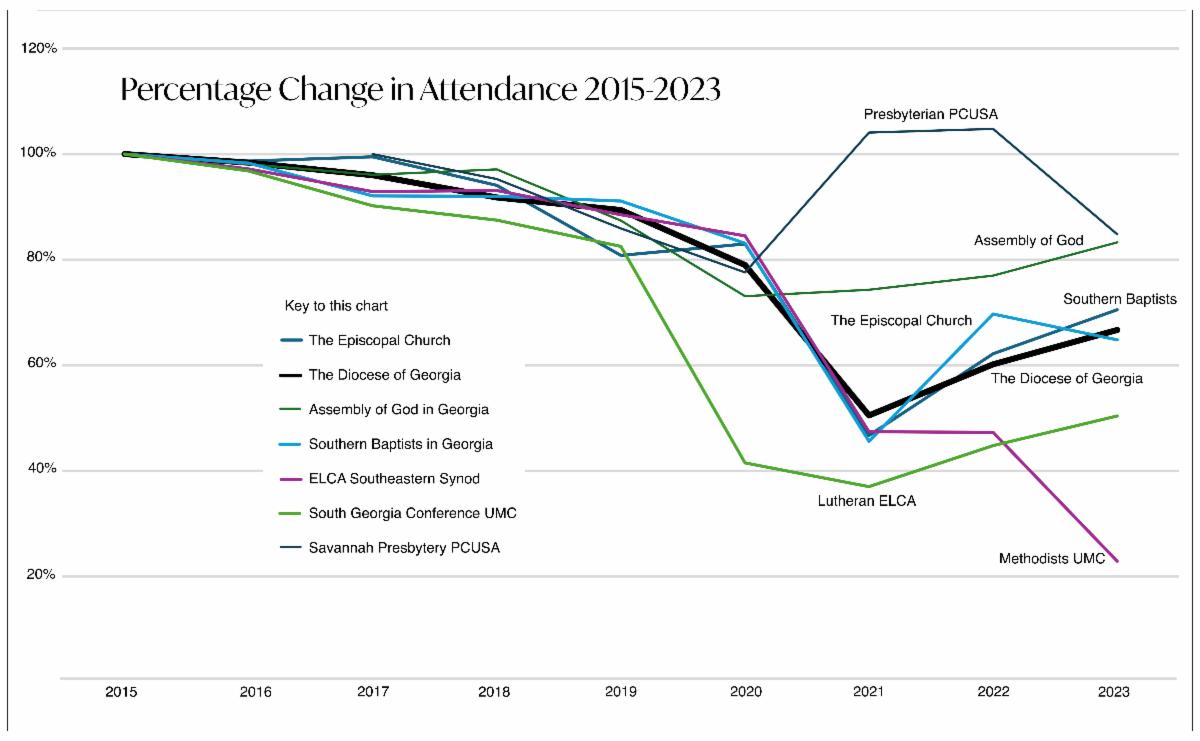
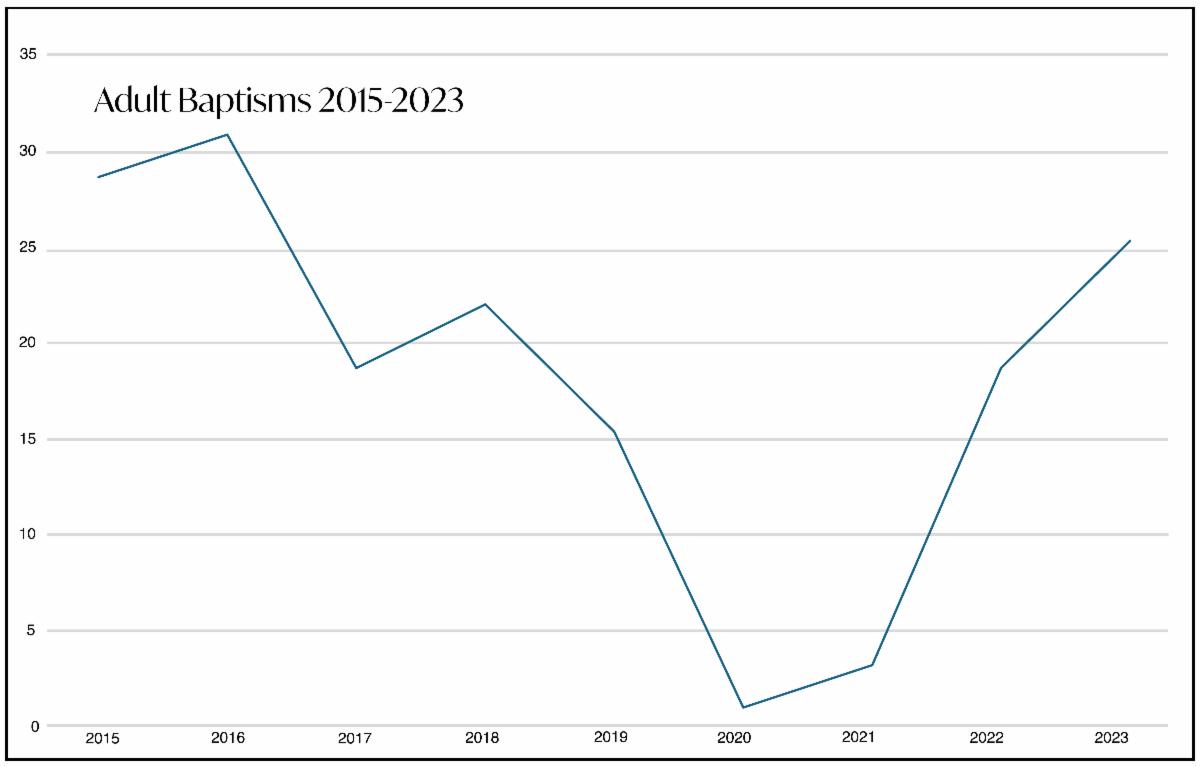 You will find charts of confirmations and receptions, alongside baptisms, and adult baptisms in the book as well. Even with declining attendance, we see those numbers bouncing back now in ways that fit what I am seeing in my travels. We have also seen Cursillo thriving once more with two weekends a year bearing the fruit we have come to expect from those retreats. Yes, attendance is not back to where we were and yes, the number of lives changed by the Gospel of Jesus Christ is more than we should expect given that decrease. God is not done with the Episcopal Diocese of Georgia. The Holy Spirit is working in and through us and sometimes in spite of us to touch the lives of people who need the grace, mercy, and forgiveness we have found.
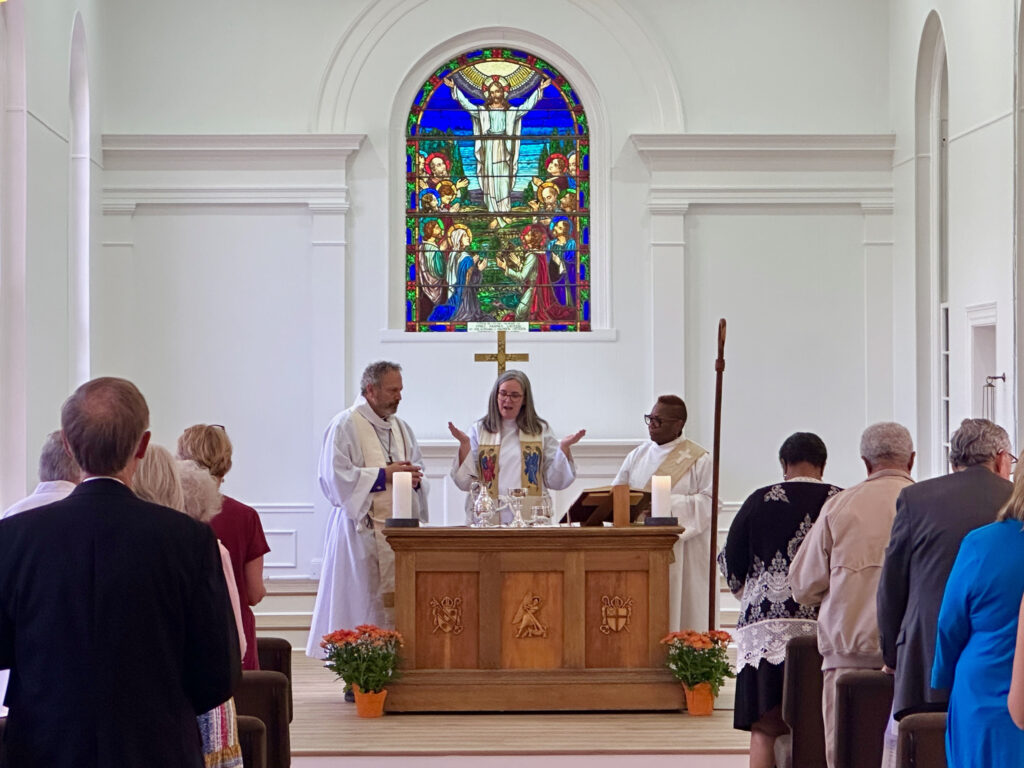 This consecration of space is an ancient practice. Our Old Testament lesson describes King Solomon consecrating the Temple in Jerusalem. Before that, Moses had consecrated the Tent of Meeting that served as the focal point of worship for the people of Israel. In each case, they offered sacrifices to God as they prayed for the ground and the tent and temple to be hallowed by the presence of the Spirit of God. This way of setting aside space for holy purpose has continued through the millennia.
 I hope that this dedication will also inspire us as a Diocese of Georgia to stand against the type of injustice that Deaconess Alexander faced through her entire ministry. Her years as a Deaconess from 1907 to her death in 1947 coincide exactly with the dates that our Diocese held segregated conventions with a separate, but not equal, meeting for black Episcopalians. Anna had to work hard to earn extra money, including through cooking meals for our summer camp that was on St. Simons Island in her day. While Camp Reese had an Anna Alexander Cabin it was described in a 1945 article in The Living Church as “a servants’ house built by the young people and named in honor of Deaconess Alexander.”
 The 1Book1Diocese read for Lent 2025 will be Rowan Williams’ deeply wise book Passions of the Soul. In this brief text the former Archbishop of Canterbury tells how self-awareness about our instincts and emotions can offer practical assistance in diagnosing what is binding us to unhelpful and potentially destructive patterns of thinking. In the process, Williams shows how these thoughts like pride or anger are not necessarily wrong in themselves if we attend to these thoughts properly. He states, “For the Eastern Christian writers, ‘passion’ is the whole realm of instinct, reaction, coping mechanisms, and this is the level at which complications arise. We cannot live without these things if we are to be human at all; yet unless we understand and in some degree transfigure them, we are trapped in something less than human.”
 In 2025, we will also offer a 1Book1Diocese read for Easter through Pentecost of Holy Mysteries: Encountering the Risen Jesus by Frank and Victoria Logue. As with their Advent through Epiphany devotional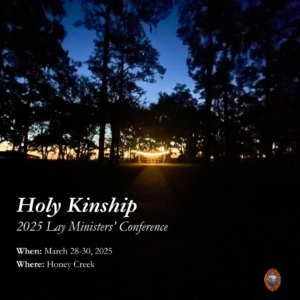
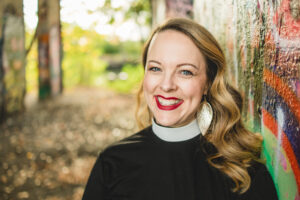 Callie Swanlund
 Anders found the camera loaded with color film and quickly captured the view in a photo called Earthrise. Everything any human had ever known could be seen in what looked to all like a blue marble hovering over the bleak lunar landscape and otherwise alone the vast emptiness of space. That startlingly new perspective, seeing earth from space, made all of human existence appear smaller, more fragile, than ever before.
 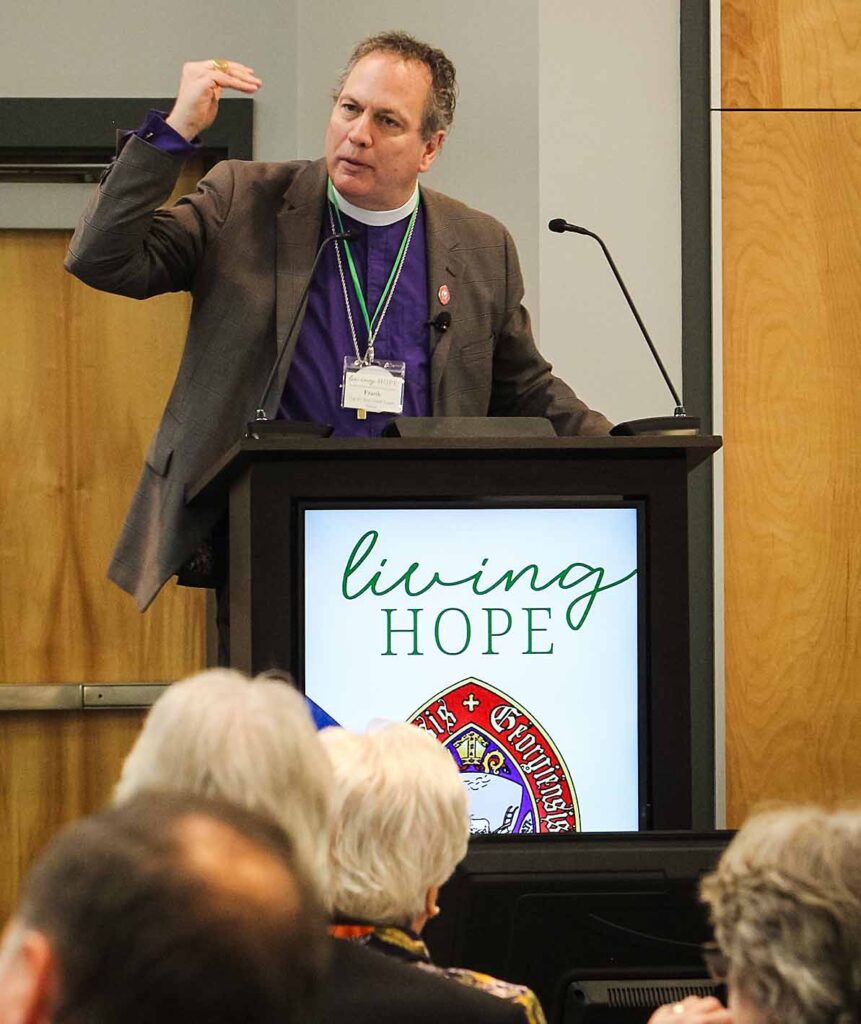 We see this in the Acts of the Apostles as in the first seven chapters of this story of what happened to Jesus’ followers after his resurrection we see how they preach with boldness and thousands come to faith. Then as that seventh chapter is ending, the Deacon Stephen is stoned to death. A persecutation breaks out against the Jesus Movement and the community scatters. Then in Acts 8, we see how God uses this tragedy to spread the Gospel. Disciples who would have stayed together in Jerusalem are soon spreading the grace, mercy, and forgiveness they have found to people who would have remained lost and left out if the faith had stayed within that small geographic area.
 This sea anchor stops the craft from drifting downwind. The sea anchor keeps the bow pointing windward, facing the waves head on. The reason this image speaks to me is that it shows that we are not being blown about by the winds of the culture or doing what the open water equivalent is of an ostrich burying its head. A sea anchor offers real stability, keeping a boat from being tossed to and fro and blown about by every wind. Anchored to the sea itself, the boat is not pushed off course, but turned into the storm in what could otherwise be an overcoming sea, we can not only endure, but in the words of the hymn Joyful, Joyful, we can experience the “Wellspring of the joy of living, ocean-depth of happy rest.”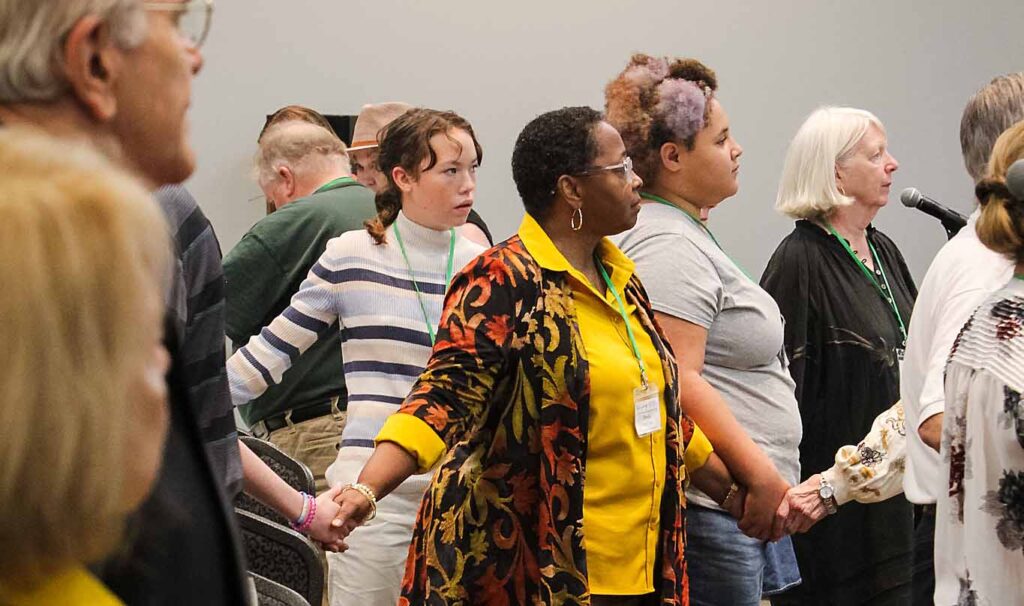
 Since we last met in convention in Augusta, that city has been hit hard by Hurricane Helene. As I said in my sermon this morning, the aftermath showed Episcopalians serving their neighbors including at Saint Paul’s where our previous convention Eucharist was celebrated and the Byllesby Center which is supported significantly by Good Shepherd where the convention met in the school gym. While many of us have been able to move on, it will be quite a while before many people in Central and South Georgia can say their lives are back to normal. Crisis reveals what is already present in a community and the Hurricane revealed the faith and resilience of our people and communities.
 As I have been getting feedback from the listening sessions and the survey, I have seen the direction the Diocese wishes to move. While there is more to hear, I already see clearly the ways in which the diocesan staff has to be more responsive to you, the people of the Diocese. There are two tiers in the Diocese—those who know staff well and have no trouble getting what they need from staff and those who don’t know who to call or how to learn where to go for help. This is not based on the size of a congregation, but the familiarity with the team. This cannot continue. To address this, I am taking a multi-pronged approach. We are making which staff to call for what is more readily evident on the website. We will also have a complete website redesign in 2025 with the sole goal of making it easier for you to find who you need and what you need. In addition, our phone system now lets a caller more easily reach the person you need. Additionally, I know that I need a Chief of Staff as my travel schedule has me away from the office enough that the staff needs a leader who is with them when I am traveling. Some other changes on staff are taking some responsibilities off of Canon Loren Lasch’s load and I am naming her the Canon to the Ordinary and Chief of Staff. This acknowledges some of what has already been a part of her work with the staff and leaning into it more.
 Now, Jesus joins Cleopas and the unnamed other disciple on the road. They are in the depths of despair as they walk toward Emmaus. Neither of these first followers of Jesus know this seeming stranger on the road to be their Rabbi. This lack of recognition reveals the way despair clouds our vision and hinders us from seeing rightly.
 I want to pause here to note how the Enlightenment that led to the gifts of modernity also found its way into our faith. The Desert Mothers and Fathers saw the struggle of good and evil playing out not just in their lives as they saw the cosmic struggle of good and evil playing itself out within their own hearts as they sought through their prayers and fasting to overcome temptations. They lived in a world shot through with a sense of transcendence, the knowledge that what we see is not all that exists in the universe as the time we live in is held in eternity.
  Seeing the ways God has broken into your life before gives confidence when looking to an uncertain future. For example, we can look at decline in church participation across the generations and join others in despair. Or we can look to the ways that the living God has been present with us in the past, is with us now, and already holds the future. That perspective makes it possible to be both realistic about where we are and what we face while remaining hopeful about the future. Whatever causes us to despair, when we tap into the certainty that God can, does, and will show up, we have a reason to hope.
 We have received a number of inquiries from outside of the Diocese about where to send donations for Disaster relief. The first way to do this is to donate directly to the Bishop’s Fund for Disaster Relief. This money will go directly to helping our parishes and Honey Creek in meeting their deductibles as they repair damages to their properties, which is a needed type of aid that is not covered by other grants. Once those initial costs are covered, any leftover donated funds will be used for additional assistance as needed.



 Kindle our hearts and awaken hope.
 Speak God, for this servant is listening.
 When the weather is nice, one of the things I enjoy is grilling on the back patio of our home. When cooking outside, I use lump charcoal, which means that the process of starting the fire is not immediate like with a gas grill. Those of you who are familiar with lump charcoal know that it is not uniform in shape like manufactured briquets that are mostly the same size. I sometimes think of this form of grilling as being similar to cooking over a campfire. The lumps of charcoal, in a variety shapes and densities, must be stacked in such a way as to allow for air to flow through the heap. After lighting the stack, I make sure the bottom and top vents are open to allow for the greatest amount of air to flow and feed the smoldering flame. After about 15 to 20 minutes, I usually return to find the embers ablaze with fire and ready for whatever needs to be cooked.
 After meeting Dave at college, falling in love and marrying, the two tried to find a church home only to discover that they were miserable sinners as they had their feet metaphorically dangled over the flames of hell. While raising kids, they took a break from church. That is when Shayna’s old softball coach’s pleas to go to church with him broke through. Dale Jones persistent invitation finally reached the point where she could not keep turning him down. Shayna says of coming into this beautiful church, “I remember that first visit so well. Yes, we were a little overwhelmed with keeping up with the prayer book, and the kneeling and standing. But, [she added] we felt the love, the genuine spirit of the people, the closeness of God. I truly felt the spirit of Jesus.”
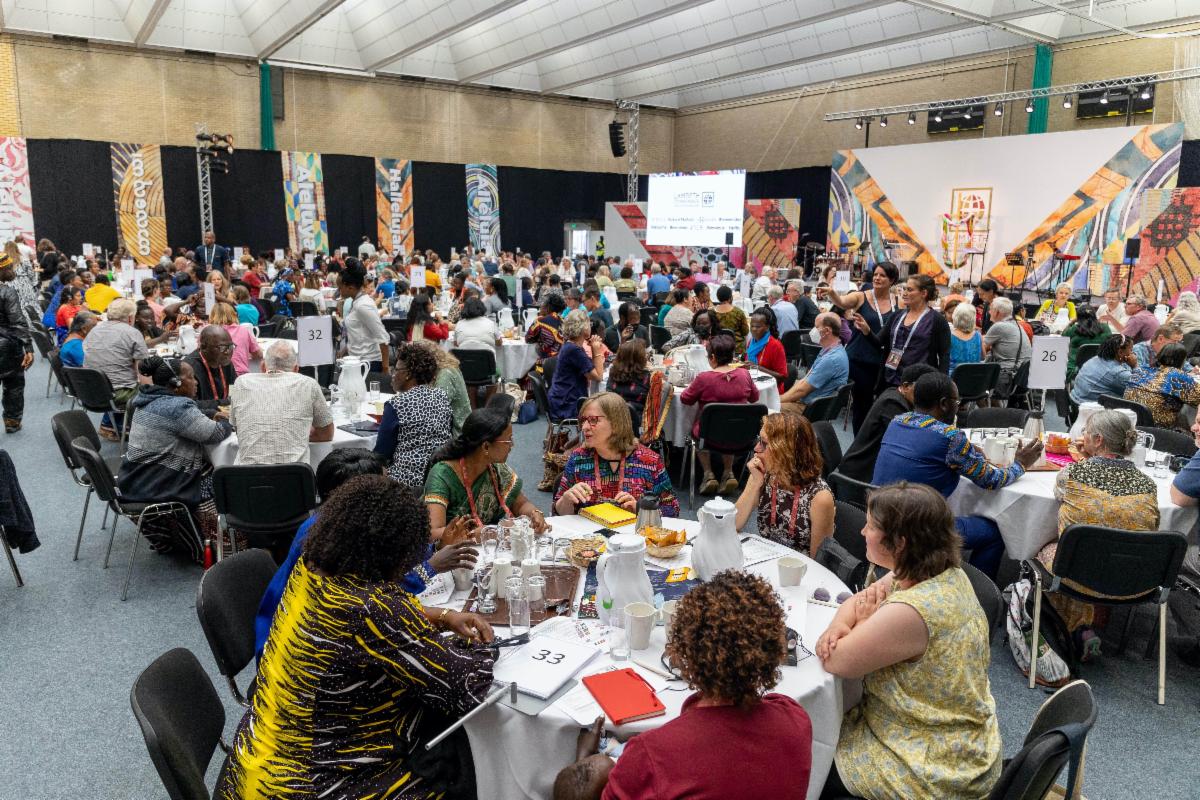 The Lambeth Conference—as an introvert, I both looked forward to and dreaded attending. From meeting with other spouses of Bishops (via Zoom instead of in-person because of Covid), I learned that we would be broken into small groups of 8-10 with other spouses from around the globe. Which meant, I was sure, that I would have to hear the simple phrase that accelerates the hearts of introverts: Let’s go around and introduce ourselves.
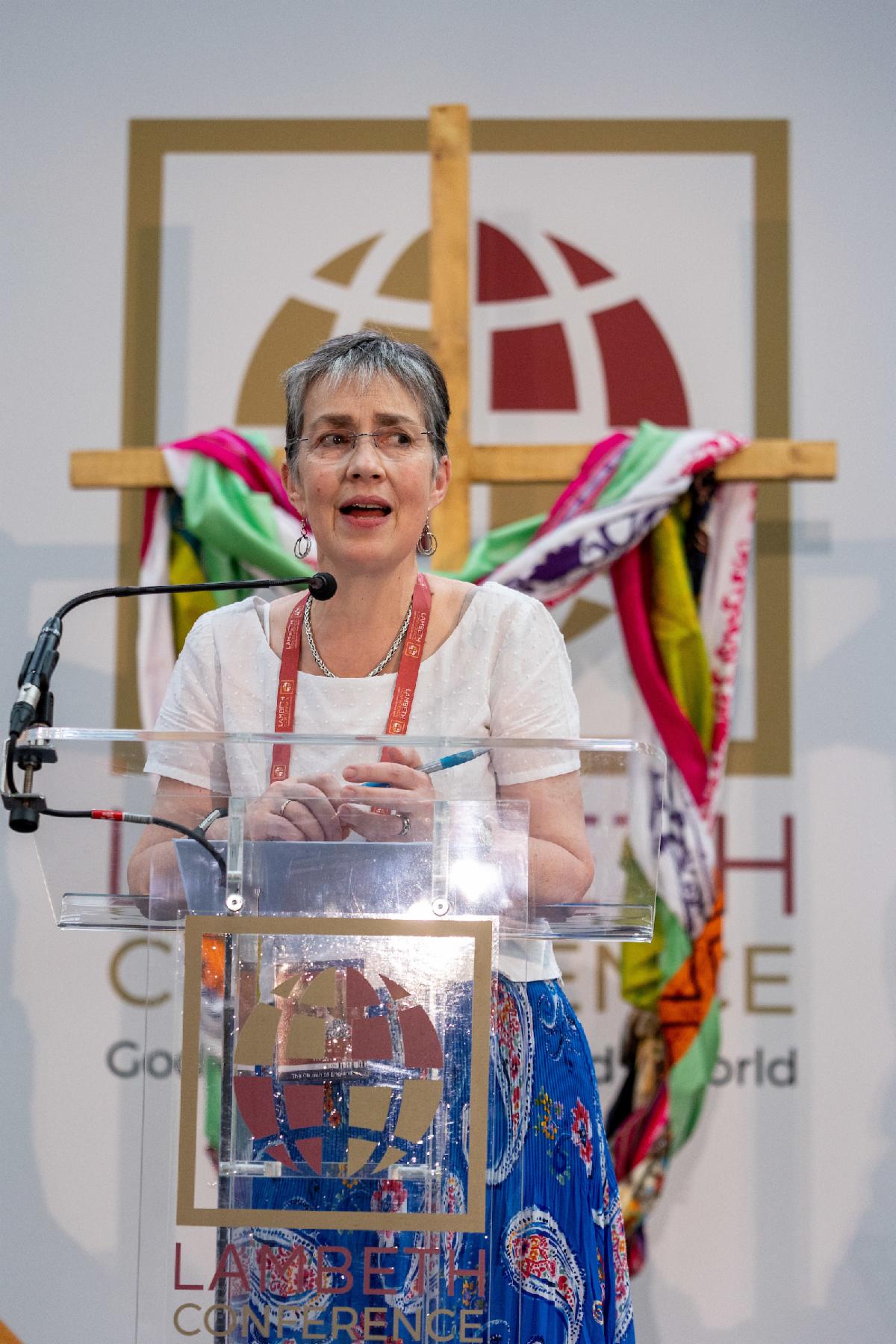 Working with the app also helped me to acquaint myself with some of the spouses attending Lambeth. So, the first time I was asked to introduce myself, I was already familiar with a number of spouses. (photo of Caroline Welby)
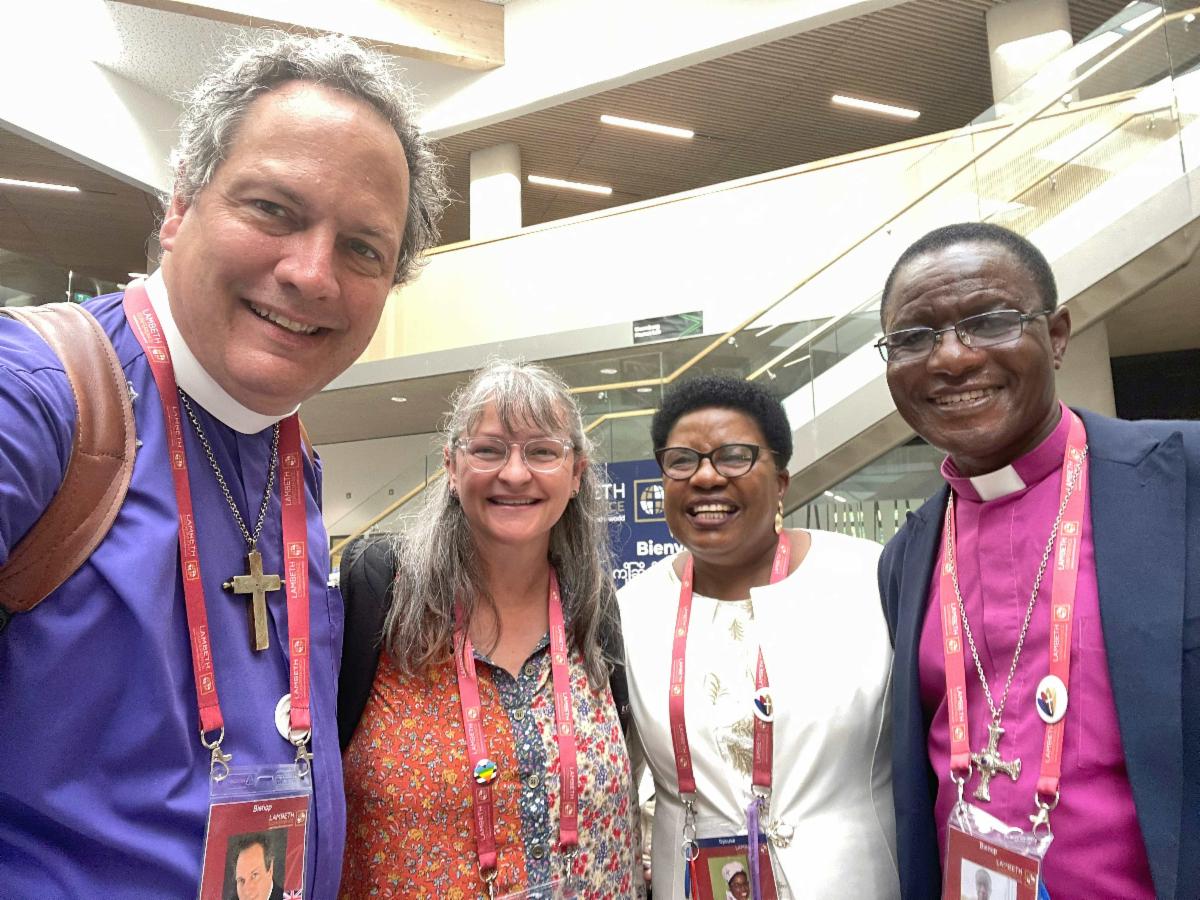 We would then break up into our small group Bible studies with the Bishops crossing the street to gather at the Parkwood Apartments in small groups and the spouses hurrying over to Venue 2 to gather at our round tables. Here we would look at the verses we had just heard about and speak to them in what became the favorite phrase at the Lambeth Conference: in my context. Because the gathered bishops and spouses were from more than 160 countries from around the world, the context for a spouse in South Sudan was different than the context for a spouse in Pakistan, which was different for a spouse in Malaysia, which was different from a spouse in America . . .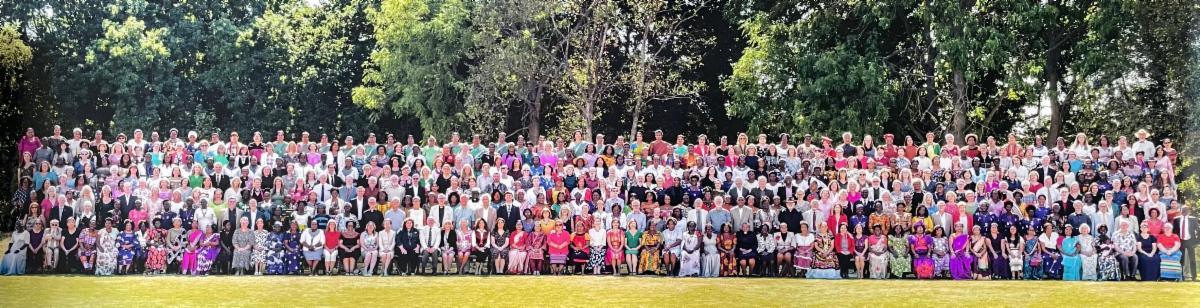
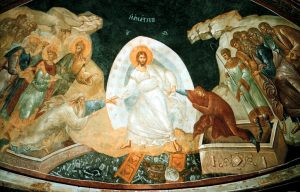 I am reminded of the Anastasis, that great icon of Holy Saturday where Jesus has descended to the dead and is bringing Adam and Eve up from the grave. In iconography, the first two humans are buried there just East of Eden, which is also the foot of the cross. Christ’s glory is bound with his degradation in this place where worlds collide, the fallen and the redeemed. Jesus’ tomb will not be empty until Jesus empties Hell.
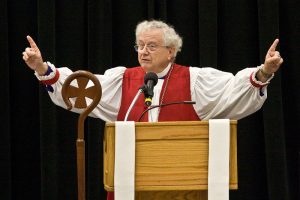 Bishop Logue and the Diocesan Staff have been working with the Louttit family on plans the funeral for the Ninth Bishop of Georgia, the Rt. Rev. Henry I. Louttit, Jr.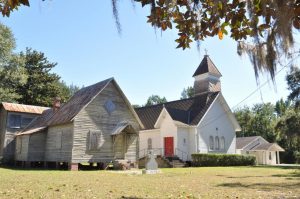
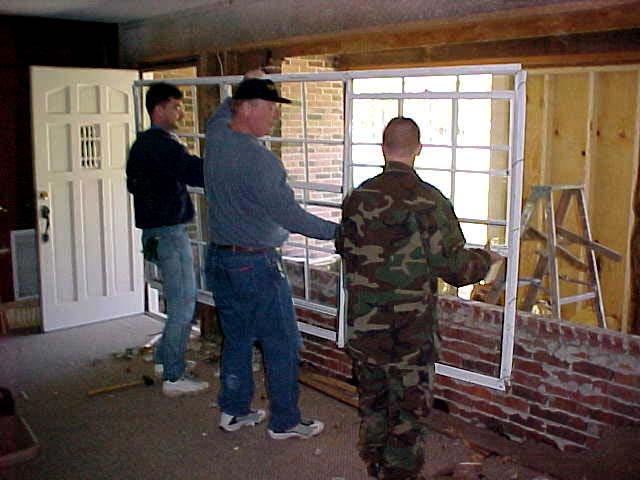 And so we began. We took the molding from around the windows and peeled off the paneling. Another parishioner arrived with his Middle Schooler son. He was a sergeant with the St. Marys Police Department. He suggested the next step, “We need to get the windows out. We all know what to do there.”
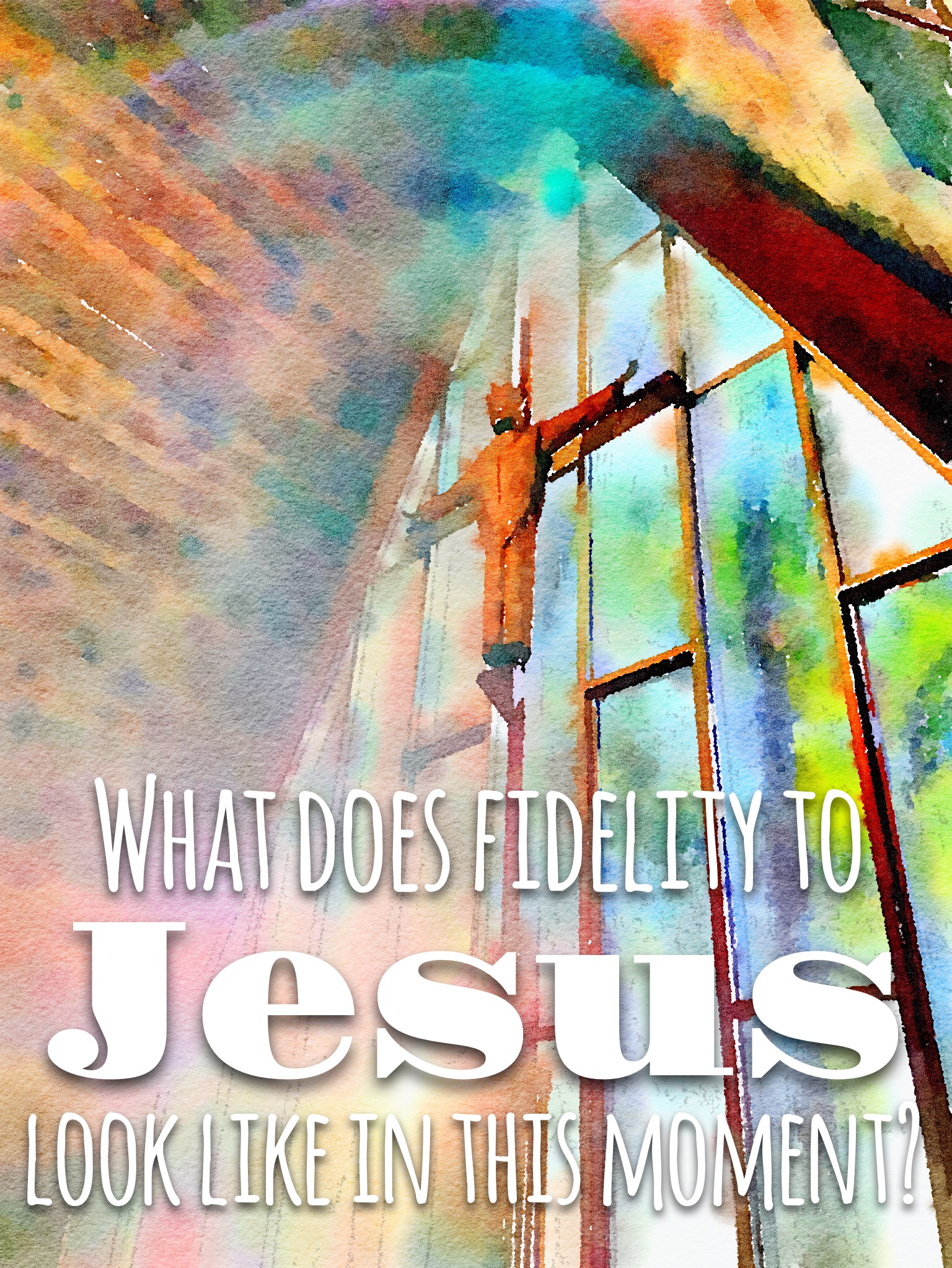 Bishop Rob Wright of the Diocese of Atlanta, offered me a clarifying question this year. One he honed while taking a class in Inquiry-Driven Leadership at MIT’s Sloan School of Management. The professor challenged the executives in the program to craft a question appropriate for their business that would cut to the heart of the essentials for their work. Rob’s question became: What does fidelity to Jesus look like in this moment?
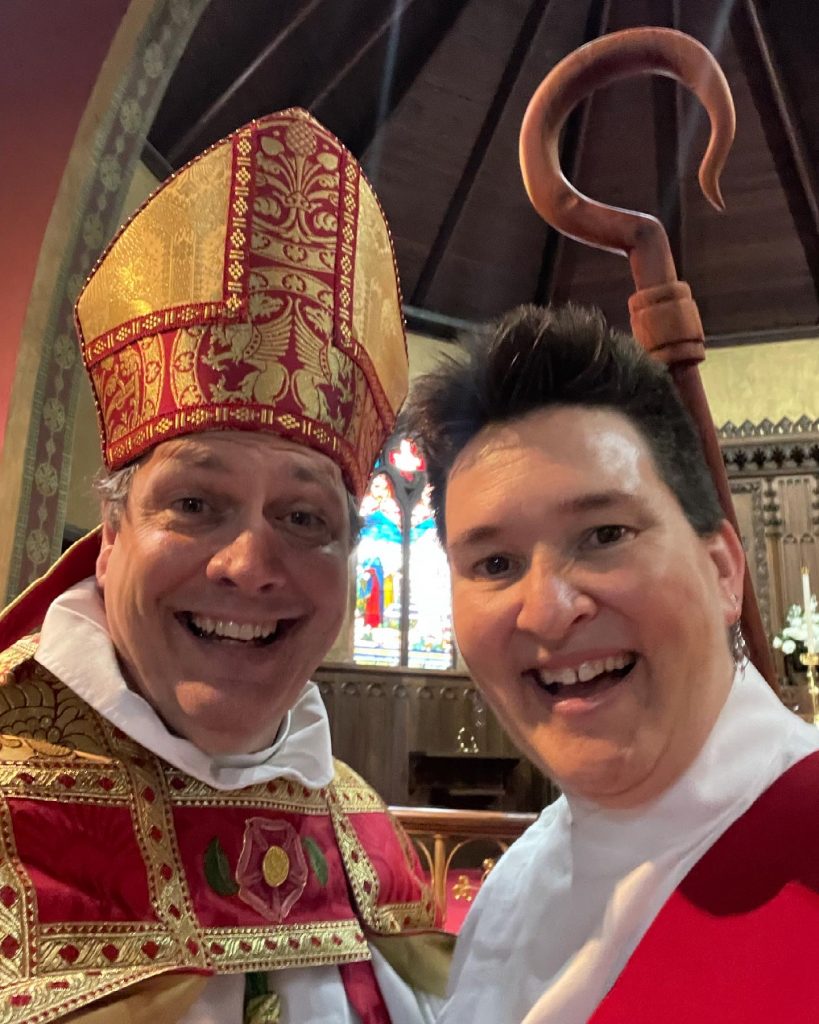 This is not to say that Susan was a stranger to church. Not by a long shot. She was baptized at Christ Episcopal Church in Exeter, New Hampshire about two months after her birth. She stood up for her place in the church at an early age too when the Rector did not understand her wanting to be a shepherd instead of an angel as boys were shepherds and girls were angels. But she was a budding thespian and Susan knew Shepherds get to play fear, which is a way better role. She did prevail and soon after began to acolyte and in a few years was confirmed.
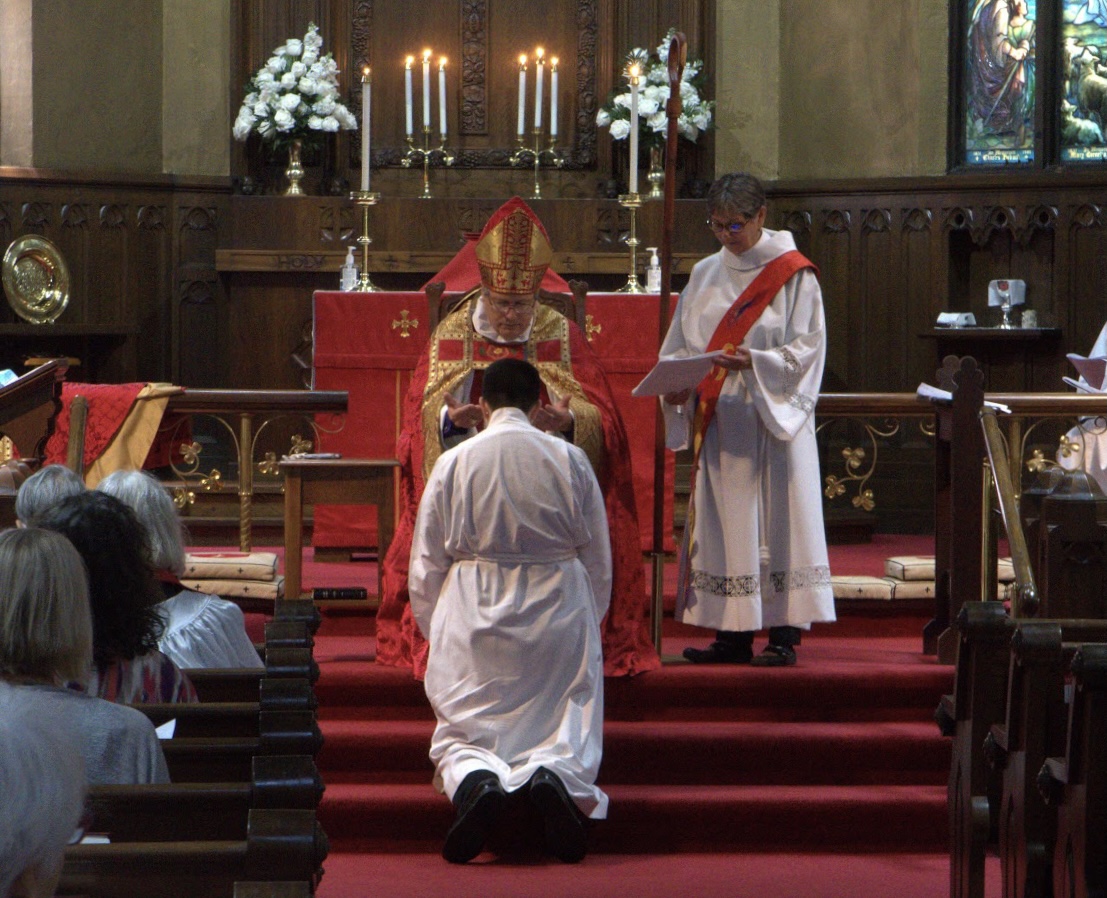 Susan listened to God telling her to go to church. She showed up only to find as she would later say, “I hard every single prayer, reading, and hymn, and the entire package was an unmistakable message: “You are loved. You always have been loved. And I will always love you.”
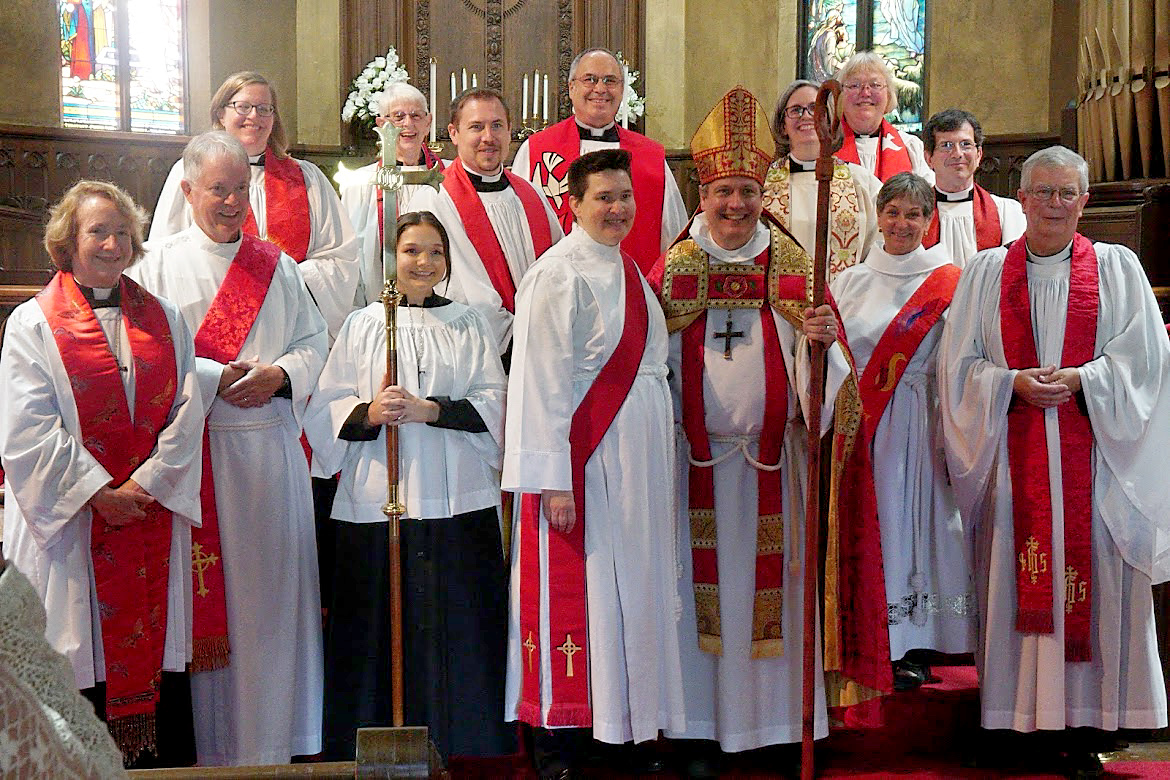 We all know the love of Jesus, the Good Shepherd who leaves the 99 sheep to go after the one that is lost. In our own families, in our workplaces, and among our friends, you and I are already deployed where God needs us to be there for people we already know to play the role that Mother Lee Shafer played in Susan’s life of being the sounding board for that feral cat stage of trying to trust God and God’s church. And in this effort, the real work is that of the Holy Spirit. I see this in how the Spirit was acting in Susan’s life to draw her back in to the Body of Christ. I have experienced this in my own life. And I have seen it in others who God has put in my path, where the Holy Spirit is already with them. We just have to be a part of affirming that message is real: You are loved. You always have been loved. And God will always love you.
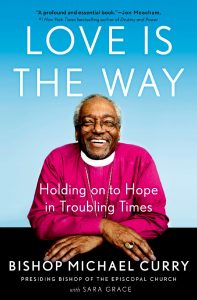 The Diocese will read together Love is the Way by Presiding Bishop Michael Curry as the 2021 1Book1Diocese pick.
  There is an image I have of the work I need to do and it is one close to home for me, as it is a vine in my own backyard. My wife, Victoria, and I bought a lovely 1925 bungalow in 2014. Everything inside was perfect. The yard was another story. The family and then couple that lived there for the forty years took less and less care of the yard as they aged.
 When I look at those vines, I realize that stopping sinful actions without addressing the roots of the sin, won’t bring healing. For the soil within me is fertile for sin. If I just cut off the vine, without working to remove the roots, the sin remains, growing and biding its time.