
A Matter of Life and Death
The Rt. Rev. Frank S. Logue gave this sermon for the clergy renewal of vows and Chrism Mass at Annunciation in Vidalia and Trinity in Cochran on April 14-15, 2025.
A Matter of Life and Death
A Sermon for the Renewal of Vows for Clergy
John 12:1-11 and John 12:20-36
“Lazarus, come out!”
Jesus, the Word made flesh, cries out this command at the grave of his friend with the tracks of the tears still evident in the dust clinging to his face from the long walk to Bethany.
John recalls the incident that marked the beginning of the end for his friend and Rabbi, “The dead man came out, his hands and feet bound with strips of cloth, and his face wrapped in a cloth. Jesus said to them, ‘Unbind him, and let him go.’”
The Beloved Disciple knew Jesus’ cruciform life shaped the warp and woof of the cosmos. John tells us, “All things came into being through him, and without him not one thing came into being. What has come into being in him was life, and the life was the light of all people.”
Just as when the earth was a formless void and darkness covered the face of the deep, the words, “Let there be light!” called all life into being, so the cry “Lazarus, come out!” marked the beginning of the end of the reign of sin and death.
The Fourth Gospel makes this clear in our reading for Monday in Holy Week where we learn that the crowds that flocked to Bethany, “came not only because of Jesus but also to see Lazarus, whom he had raised from the dead.” Then in our reading for Tuesday in Holy Week, some Greeks seek out “Philip, who was from Bethsaida in Galilee, and said to him, ‘Sir, we wish to see Jesus.’”
Jesus can read the signs. He knows the Chronos of the Passover for this year will align with the Kairos of his sacrificial death. He says, “The hour has come for the Son of Man to be glorified. Very truly, I tell you, unless a grain of wheat falls into the earth and dies, it remains just a single grain; but if it dies, it bears much fruit.”
Jesus calling Lazarus out from the tomb is the turning point. The Beloved Disciple slows down the steady pace he had maintained. John used ten chapters to propel us from the Word being made flesh through almost all of Jesus’ years of active ministry. The remaining eleven chapters of the Gospel describe the little more than two weeks that passed between Lazarus coming out of the grave and Jesus cooking breakfast on the beach for his disciples.
Four chapters alone are given to Jesus’ last words on the night before he died. Jesus taught us that he is the vine and we are the branches. He prayed for his followers and added, “I ask not only on behalf of these, but also on behalf of those who will believe in me through their word, that they may all be one. As you, Father, are in me and I am in you, may they also be in us, so that the world may believe that you have sent me.”
So that the world may believe.
This is John’s sole purpose in writing his Gospel: to bring people to faith in Jesus. John writes, “Now Jesus did many other signs in the presence of his disciples, which are not written in this book. But these are written so that you may come to believe that Jesus is the Messiah, the Son of God, and that through believing you may have life in his name.”
John knew the synoptic Gospels but longed to tell the Good News from the cosmic, more mystical dimension he had come to understand, and in the process to emphasize that knowing Jesus is a matter of life and death. Knowing Jesus remains a matter of life and death.
You know this. Ministry offers moments when God shows up in ways that take your breath away. Those moments do not come as often as I wish and there is so much of life in the church from one of these experiences to the next that it is all too easy to despair. We preach from the depths of our being, sharing the Gospel as we know it, only to see parishioners hurting one another, lashing out at us or worse, our families, while others who have faithfully shown up seem to have nothing to draw from when tragedy strikes. There is so much one faces in leading a church. The people of God can be exhausting even on their best days.
Yet, I can’t quit this life of service as I have experienced God showing up in my life and in the lives or others, not always how and when I wish, but with a dependability that has led me to put my trust in God and to encourage others to do the same. This is, of course, not about faith that works solely in the easy times in life. Our faith in Jesus speaks to chaos and darkness so that even at the grave we can sing God’s praises. I know this from sitting at the bedside of those dying in Hospice Care or more painfully standing by parents in the Emergency Room as their child’s life slips away and have also been the father with my daughter’s life hanging in the balance.
I have seen people move from death back to life in ways that fill me with awe. I have prayed with a Mom across years as her son clawed his way back to the light from the deep darkness of a heroin addiction. This was a rocky path, with a series of fits and starts, rehab and relapse, rehab and relapse, desperation, crime, and arrest. Then rehab and relapse, rehab and relapse, until he could find his way back to life. The danger of falling back always remains, but he is now years sober. When this man names the living God brought him back from the dead, I can only agree and give thanks.
The wider view that John offers in his Gospel, beginning with the Word made flesh living among us fits with the Apostle Paul seeing the cosmic battle we face in proclaiming that “Our struggle is not against enemies of blood and flesh, but against the rulers, against the authorities, against the cosmic powers of this present darkness, against the spiritual forces of evil in the heavenly places” (Ephesians 6:12).
The principalities of this present darkness put the Son of God to death on a cross. God brought Jesus from the grave, not resuscitated as Lazarus who would die again, but in a resurrection in which life conquered death. Jesus rose to never die again in order to show us that love defeats hate. The powers of this present age are still trying to convince us that we need to get what we can however we can, while also whispering in our ear that we are not enough, we will never measure up. This is not the path of life, but the way of a world turned from God.
We serve in a time of decline with a rebound from the pandemic that still falls short of our previous heights. It would be easy to simply manage the decline. Yet we serve in communities filled with people who need to know the life-giving Good News. They know churches. They know lots of Christians. They know of Jesus. But many of our neighbors do not know that there is an escape route form the cycle of shame and fear. They need to know they can enjoy the grace of forgiveness and healing. They need to experience the surpassing joy that comes from feeling in their marrow that they matter to the maker of heaven and earth. They need to be unbound and set free from sin and death.
The church needs to be set free as well. For the church isn’t dying, we are killing when we allow our concern to be for preserving an institution rather than being the Body of Christ in the times we are given to serve. Our call is not to save the Church. Our call is to serve as witnesses to the Truth of Jesus. In fractured times, the world needs people who point to the deeper reality that what unites us matters more than what separates us as every human is made in the image and likeness of God.
Without your witness, and the witness of those in your congregation, some of our neighbors would continue to be lost, left out, or marginalized. Your call matters all the more as our communities are so very divided while everyone on each side of the political divide and those caught in the middle all so desperately need the words of love and life rather than hatred and death. Your call as a deacon or priest is of eternal significance.
The same Word of God that said, “Let there be light!” called Lazarus from the grave, and continues to speak life to all on the path that leads to death. This week and every week, our call is not to save the world or even the church. Our call is to faithfully point beyond ourselves to Jesus so that the world may believe.
Amen.
 Sean said, “And finally, what about our idolatry of structures and practices that exclude and diminish our witness? We have to get it together. That’s going to mean laying some things down.” By the end of the day, an announcement went out to the church that our Presiding Bishop-Elect
 The gift nestled in our propers for this commencement is clarity that while we long to see lives changed by the Good News of Jesus, that
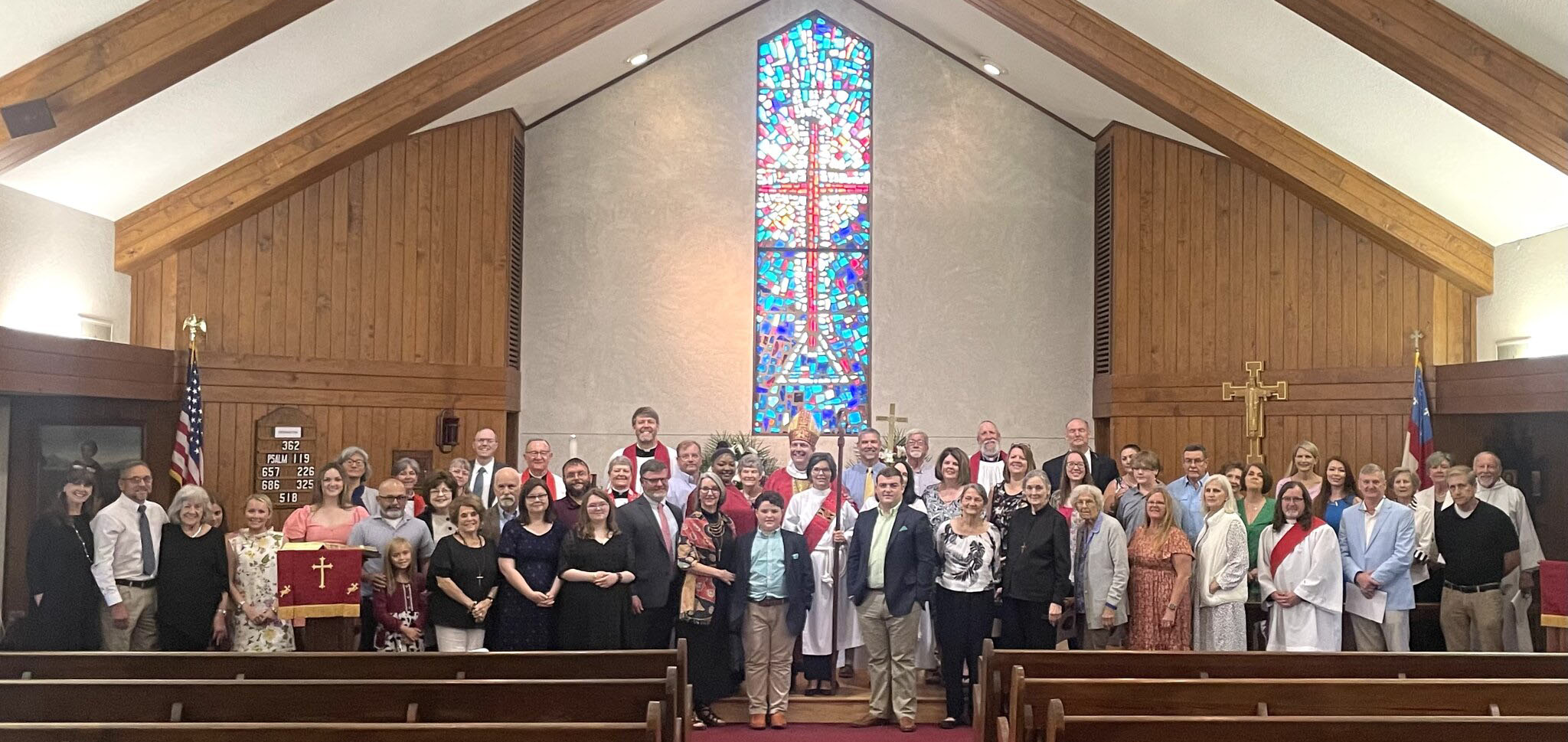
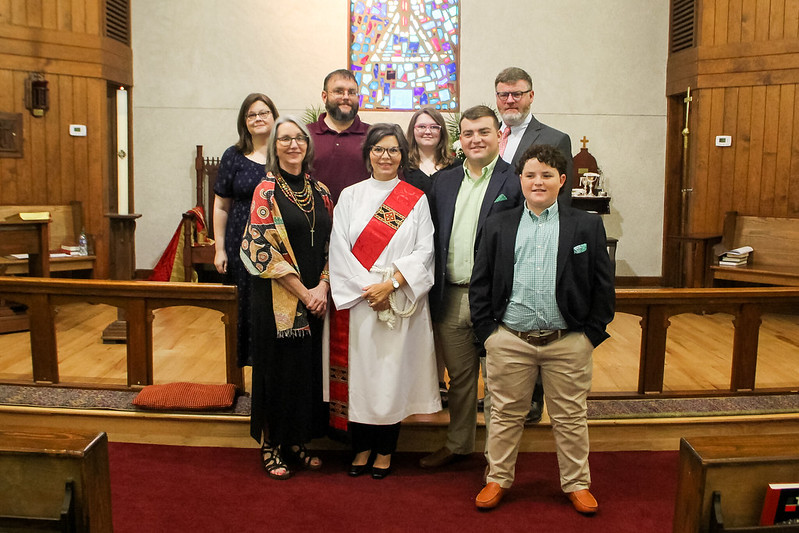 After meeting Dave at college, falling in love and marrying, the two tried to find a church home only to discover that they were miserable sinners as they had their feet metaphorically dangled over the flames of hell. While raising kids, they took a break from church. That is when Shayna’s old softball coach’s pleas to go to church with him broke through. Dale Jones persistent invitation finally reached the point where she could not keep turning him down. Shayna says of coming into this beautiful church, “I remember that first visit so well. Yes, we were a little overwhelmed with keeping up with the prayer book, and the kneeling and standing. But, [she added] we felt the love, the genuine spirit of the people, the closeness of God. I truly felt the spirit of Jesus.”
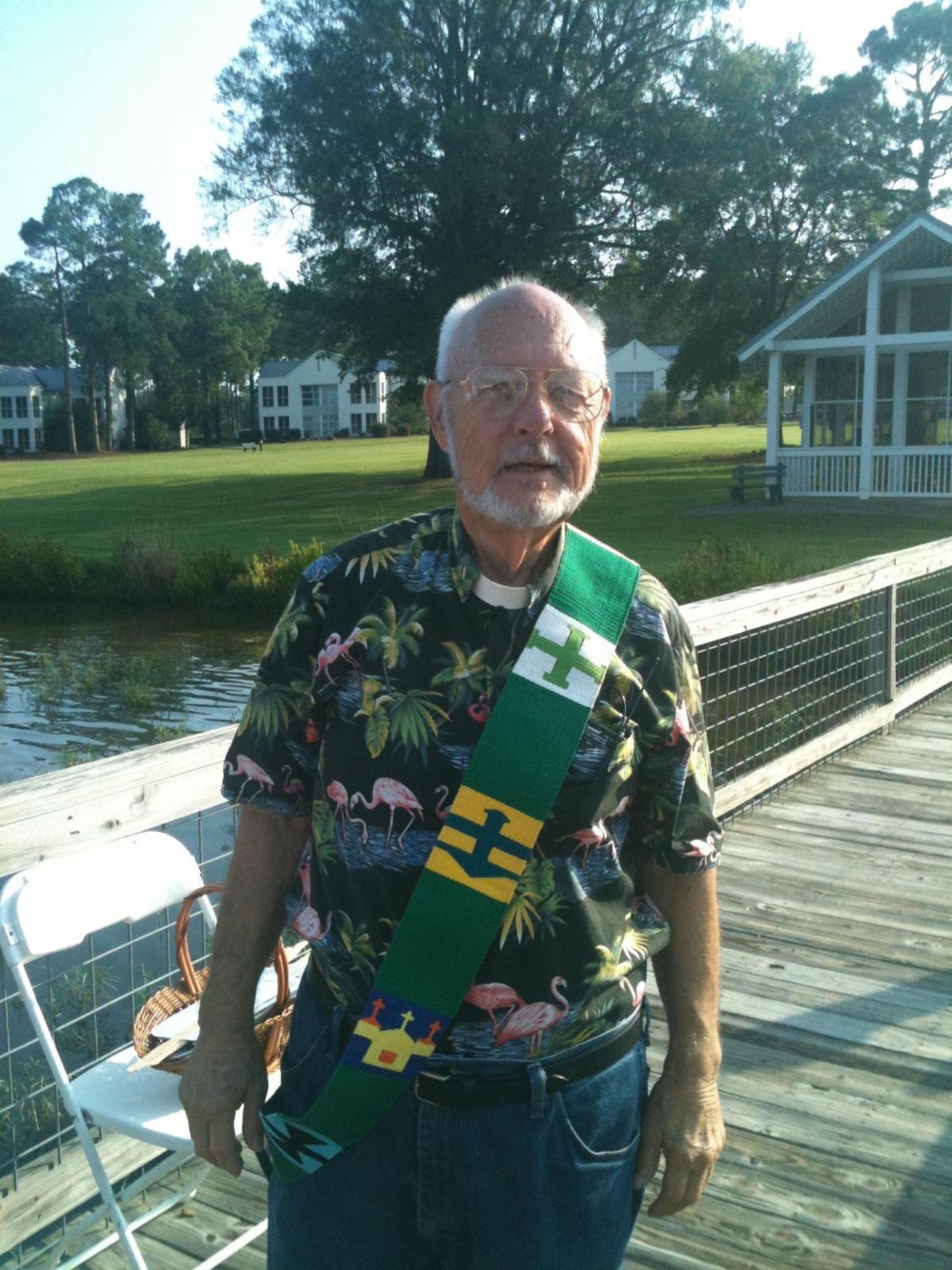 This was faith he learned in the cradle. Born at home, in the little Central Florida settlement of Clay Sink, the entire population were his family by blood and marriage. He was at birth added to the cradle roll of Clay Sink Baptist Church. While his family would move around the Lakeland area, church was a constant for his parents, for Johnny, and his four brothers and three sisters. He was a steady presence in Sunday School, sang in the youth choir, and took part in all the activities for youth. He made his public confession of faith at the church in Kathleen, Florida, where four generations of his family are buried.
 Yet this fails to capture the liveliness of a woman of great depth. With a playful spirit and a great sense of humor, you just never knew what she was going to say. Of George’s call to ministry coming after he had settled well into the family’s furniture business, she said, “We were convinced it was a call from God, because we would have never thought of it.”
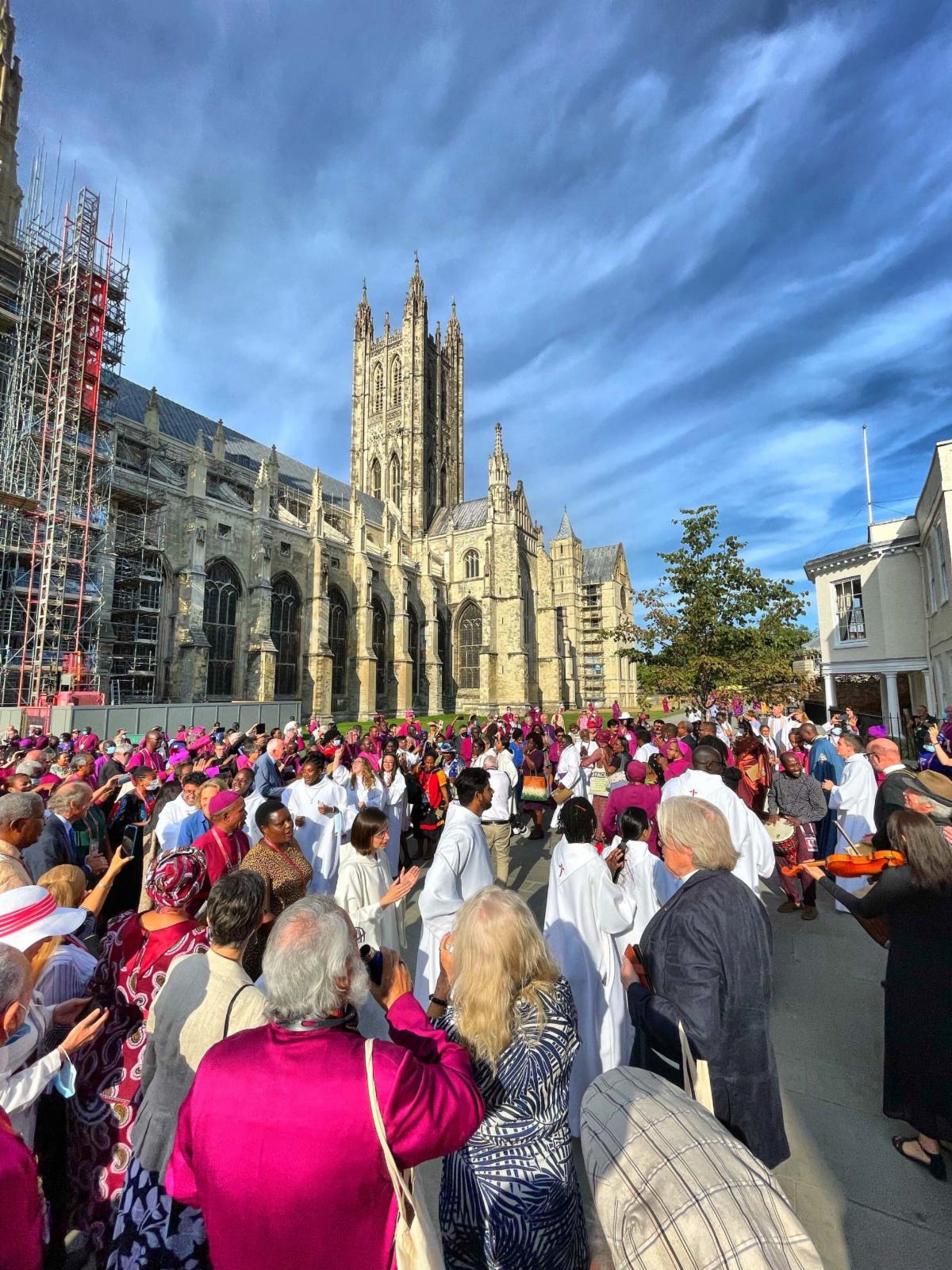 In every congregation of the Diocese of Georgia, I know people who disagree with each other profoundly on politics (and sports which is even more difficult) who are grateful to worship together and miss one another if someone is not in church. I value this so much. We differ in many ways, but we all know that we need Jesus and we need each other. I have seen this writ large in gathering with more than 650 bishops from 165 countries at the Lambeth Conference.
 When we gathered here, Archbishop Welby said, “You are the shepherds of your flock as I am the shepherd of the flock that I serve. Let us not act in a way that disgraces our witness. Speak frankly, but in love.”
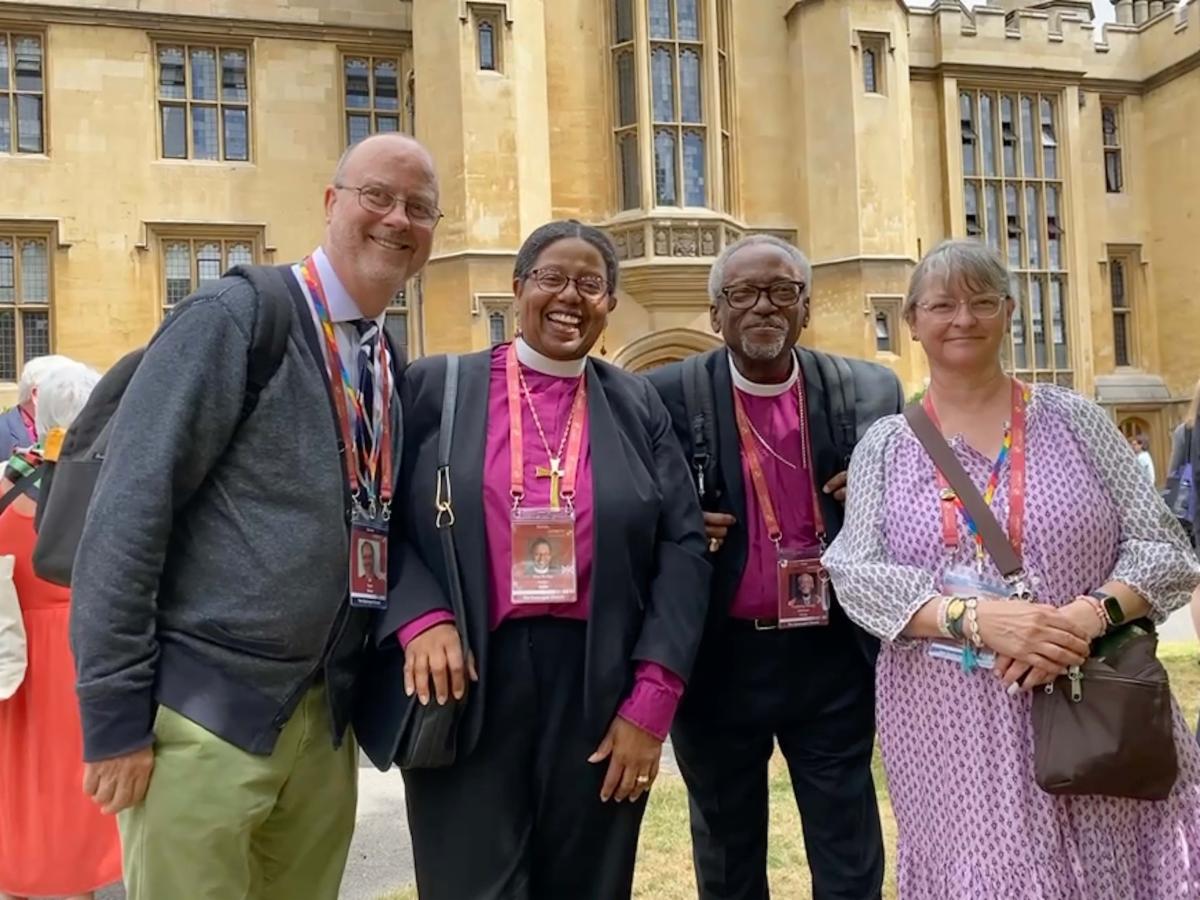 Last evening, in a bit of serendipity, I came back to the dorm from the Eucharist walking, holding hands, and talking with the Archbishop of South Sudan, on a lovely late evening in Kent with Canterbury Cathedral at our backs and a return home in front of us. Two bishops from very different contexts with different views of a Jesus shaped life, but with the most important thing in common: we are both beloved children of God, united by one Lord, one faith, one baptism.
 I am at the Lambeth Conference of Bishops of the Anglican Communion with more than 650 bishops and more than 460 spouses from 165 countries. Our time together includes a deep dive into the First Letter of Peter led by the Archbishop of Canterbury, Justin Welby. This week Bishop Hosam Rafa Naoum, the Bishop of Jerusalem and the Middle East, who I met at his church in 2018 before either of us were elected as bishops, told me then and repeated again to a gathering this week that people go to the Holy Land to see the stones, but need to meet the living stones, the Christians of the Holy Land. Now here at Canterbury Cathedral, an ancient site of pilgrimage, I have enjoyed this historic place, but am being transformed by the living stones, the bishops and spouses from around the world.
 I am finding this time so humbling. The problems we face in Central and South Georgia are put into perspective by dedicated followers of Jesus who love Word and Sacrament as we do and face daily challenges we can not imagine. This is the 15th Lambeth Conference since the first in 1867. While the provinces of the Anglican Communion, such as our Episcopal Church, are independent, we are also deeply interdependent and while this conference has no authority over us, the moral authority over time makes a difference.
 As the Bishops of the Anglican Communion meet together for the first time since 2008, Bishop Frank and Victoria Logue are representing the Diocese of Georgia at the historic meeting. First convened by the Archbishop of Canterbury in 1867, these conferences are an essential part of establishing and maintaining connections with Anglicans around the world. With the theme of ‘God’s Church for God’s World – walking, listening and witnessing together,’ the conference will explore what it means for the Anglican Communion to be responsive to the needs of a 21st Century world.
 Victoria is on the leadership team for the “House of Spouse” as the spouses of the House of Bishops are known. She will take part in a variety of events at Lambeth that will include any of the spouses of the Episcopal Church who will be present for the conference as well as spouses from around the Communion. The spouse gatherings are an important part of the meeting.
 The announced goal of the conference is to resource, inspire, and encourage Bishops in their local ministries; supporting their pastoral and leadership roles in church life and mission as we all follow Jesus. In an unexpected move, the Archbishop of Canterbury sent out a 58-page document to affirm as a body. The text is problematic as it asks for clear stands together where there are deeply held differences. Most notably, it initially asked those in attendance to reaffirm Lambeth resolution I.10, from 1998, which is against extending all of the sacraments to all baptized Christians. The concerns many bishops raised, including Bishop Logue, led to a revision, which itself may be the subject of further debate. This late change is shifting the character of the meeting even as bishops are checking in on site for the conference. Please hold the Logues in prayer as they worship and discern alongside their colleagues from around the world a faithful way to continue to walk together given these differences, while honoring the dignity of all God’s children.
 In the spring of 2020, Presiding Bishop Michael Curry saw how the pandemic led to history was repeating itself when planning was underway to consecrate a handful of bishops with only the minimal people present as required by canons. He was reminded of the Scottish Episcopal Church’s cathedral in Aberdeen where a small gathering consecrated Samuel Seabury as the first American Bishop in November 1784. Bishop Curry referred to the liturgies in pandemic as “Aberdeen Consecrations.” When Bishop Logue became the first person made a bishop with a congregation largely online, the image was even clearer as Communications Manager Liz Williams’ photo of the moment with just three bishops laying on hands looked more like a stained glass window in Aberdeen than any consecration in memory.
 To honor this history and further renew the connection, Bishop Logue, together with Bishop Deon Johnson of Missouri, Bishop Glenda Curry of Alabama, and Bishop Craig Loya of Minnesota will travel this week to Scotland for a series of visits in the Diocese of Aberdeen and Orkney. Bishop Logue will preach at St. Andrew’s in Alford this coming Sunday as a part of this visit.
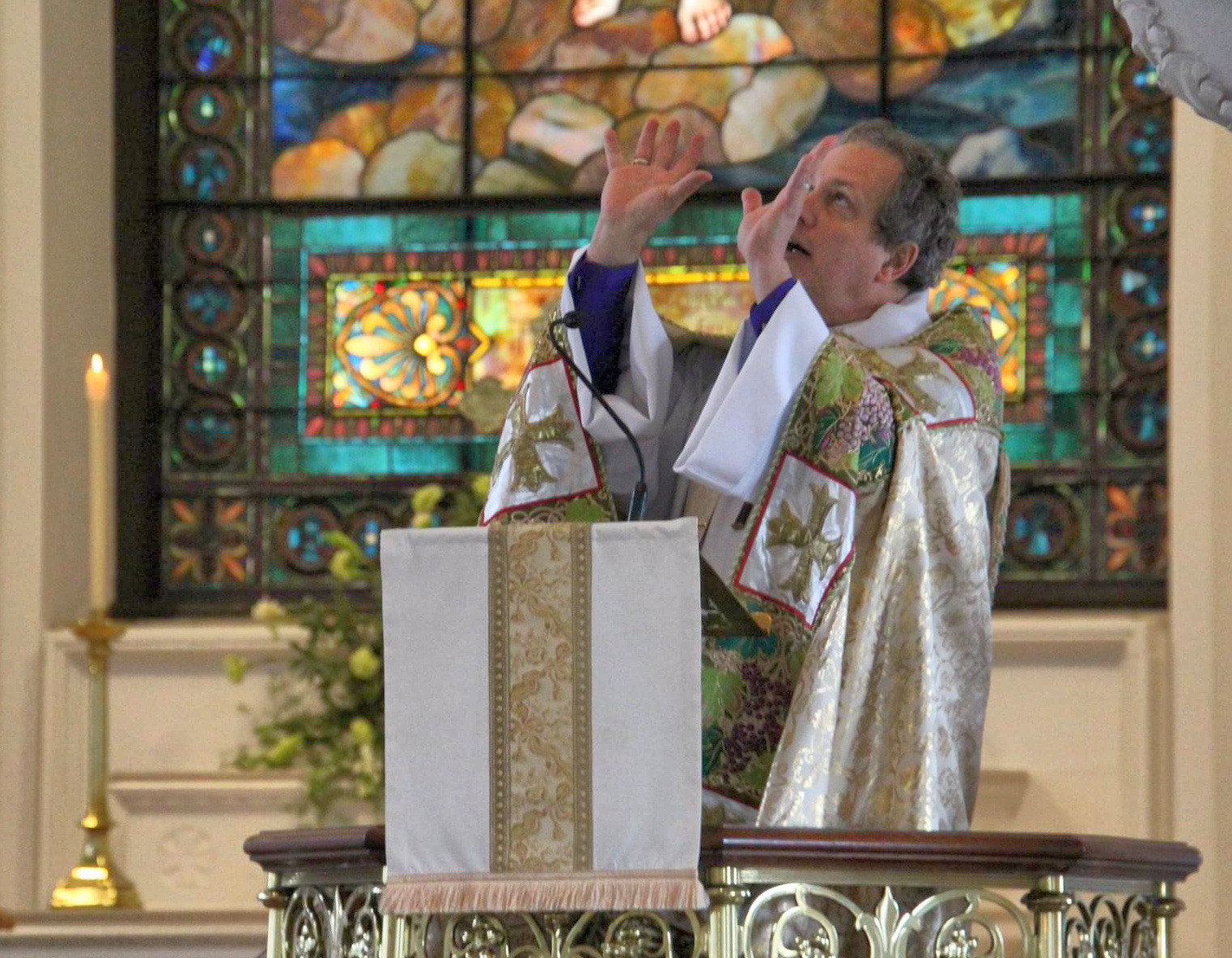 Nothing sounded like Good News to me until I looked at the Gospel passage from below, well below the waters of the Sea of Galilee, seeing a net descending. Okay, I know, a story of nets bursting with fish may not sound like Good News for the fish, but there is something deeper going on here. I stumbled into grace and love when I realized what Jesus did not say.
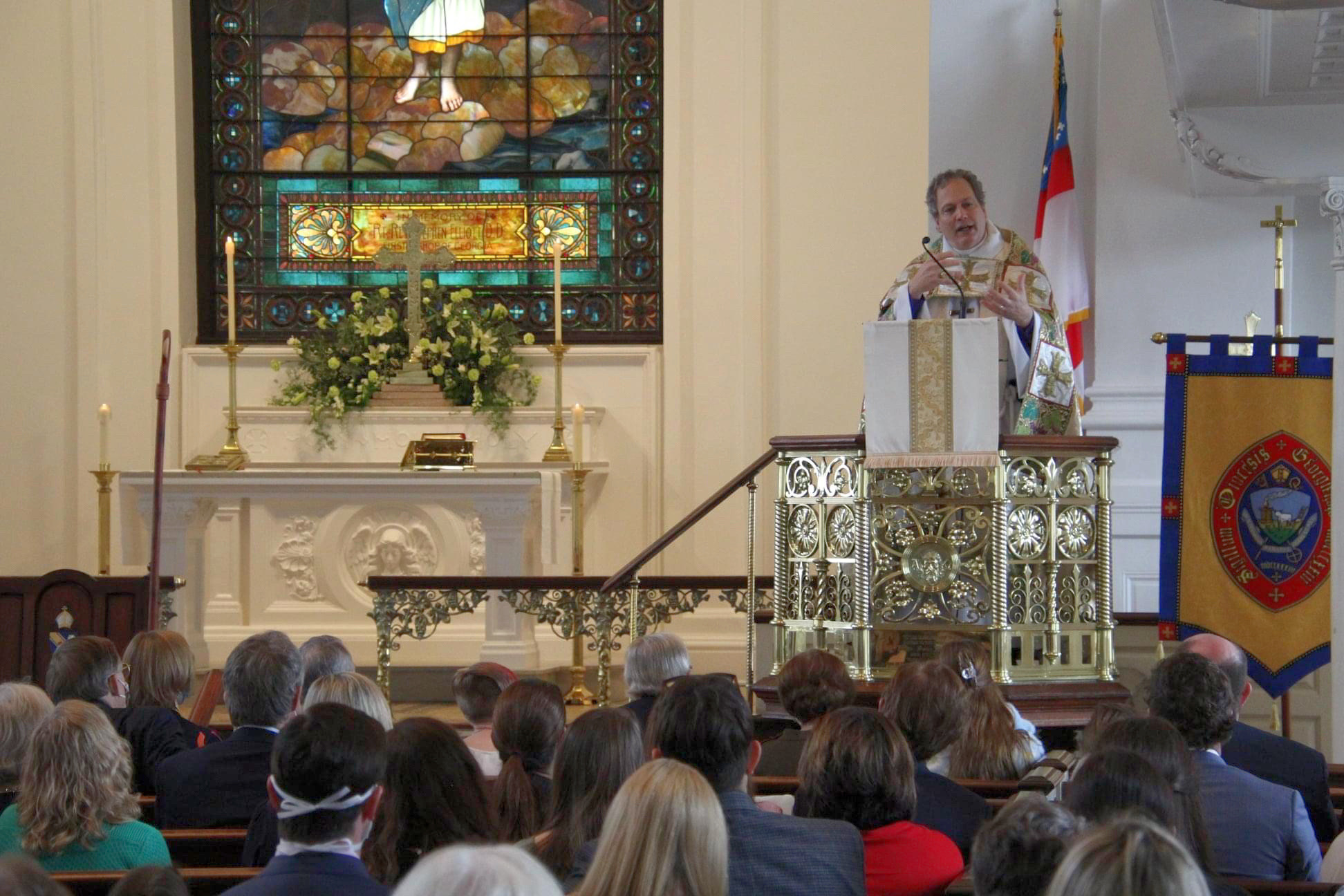 Yet, what we do have as followers of Jesus is a relationship with the God who is working to redeem our world one wild and precious life at a time. What we have is the knowledge that everything we now see and experience is not all there is. The creator of the cosmos knows you by name, has always loved you, will never give up on you, and wants better for you. We have the hope in the God who goes to the depths of human existence to love, truly love, those who see themselves as lost, unfit, and sinful. God is always offering a chance for a clean slate, a fresh start, and will never leave you to the chaos that threatens to consume you. God will send a net.
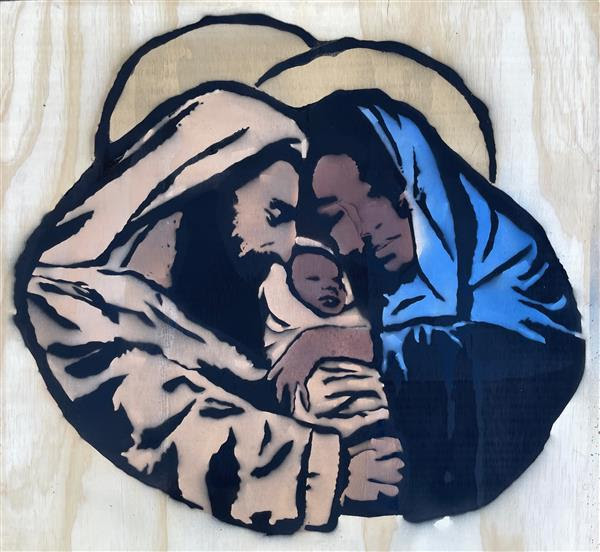 Christmas is the story of human hopes and fears met in the night by the maker of heaven and earth coming to live as one of us. We invariably tell of Jesus’ birth as a night story. It need not be so as the Gospel writer Luke said of Joseph and Mary’s stay in Bethlehem for the census, “While they were there, the time came for her to deliver her child.” Meanwhile Matthew writes of Joseph having a dream and waking to resolve to wed Mary and that after she bore a son, he named him Jesus. At right is Bishop Logue’s graffiti-style image of The Holy Family, which he painted last weekend on plywood, using spray paint and a hand-cut stencil he designed.